



Bitcoin is the most widely accepted cryptocurrency at online poker sites not because of marketing decisions, but because of its technical properties. Its proof-of-work consensus, 14-year track record of uninterrupted operation, deepest liquidity of any crypto asset, and the most mature self-custody tooling available make it the default choice for players who want a payment method they can verify and trust without relying on any third party.
Other cryptocurrencies offer genuine advantages in specific areas—Ethereum settles faster, Litecoin costs less per transaction, stablecoins eliminate volatility. But none match Bitcoin’s combination of network security, settlement finality, and infrastructure depth. Understanding why requires looking at the technical trade-offs each cryptocurrency makes, and what those trade-offs mean operationally for poker deposits and withdrawals.
This guide examines Bitcoin’s technical properties that drive its dominance, compares them against alternatives, and explains where other cryptocurrencies make more sense depending on your operational priorities.
Bitcoin’s Technical Foundation: Why It Became the Standard
Bitcoin’s dominance in online poker isn’t accidental—it reflects a specific set of technical properties that matter for financial settlement. The proof-of-work consensus mechanism, combined with the longest uninterrupted blockchain in existence, creates settlement finality that no other cryptocurrency currently matches in terms of raw security guarantees.
The Bitcoin network processes every transaction through distributed consensus across tens of thousands of nodes globally. No single entity controls the protocol. No government or regulator can freeze a correctly executed Bitcoin transaction. No company can go insolvent and take your funds. These properties exist because of how the protocol is designed, not because of promises from any organization—and poker players seeking permissionless, censorship-resistant payment processing have recognized this for over a decade.
Liquidity depth also matters operationally. Bitcoin maintains the largest trading volume and deepest order books of any cryptocurrency across all major exchanges globally. This means players can convert between Bitcoin and local currencies with minimal slippage at virtually any hour, in virtually any jurisdiction. Altcoins with thinner liquidity can see significant price impact on larger transactions, a practical friction that Bitcoin avoids at most transaction sizes relevant to poker.
The Proof-of-Work Security Model Explained
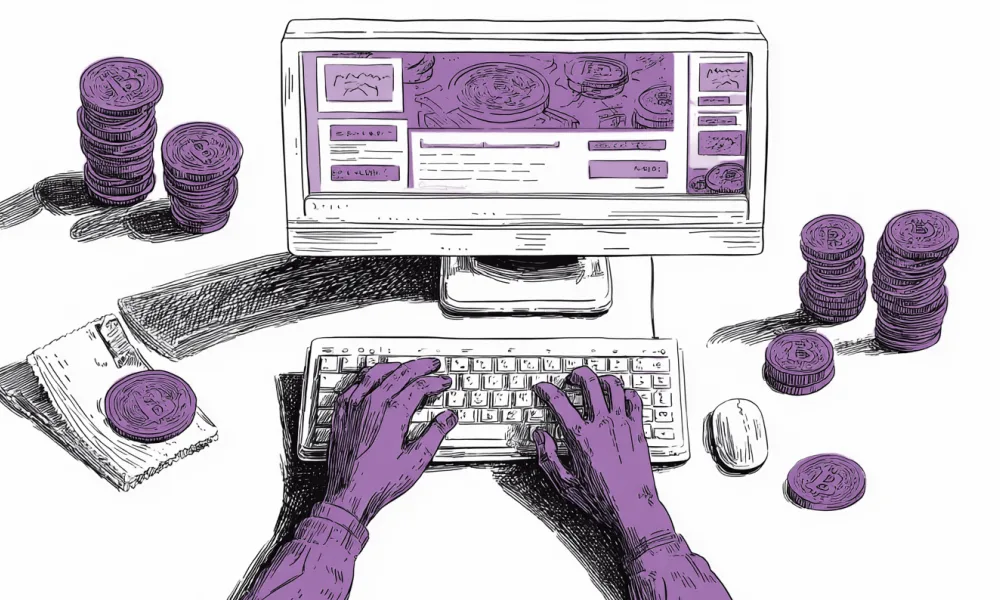
Bitcoin’s security model is based on proof-of-work: to alter any confirmed transaction, an attacker would need to redo the computational work of all subsequent blocks while simultaneously outpacing the honest network. At current hash rates—measured in exahashes per second—this attack requires hardware and energy costs that make it economically irrational at any realistic scale.
Each confirmation exponentially increases the cost to reverse a transaction. After 3 confirmations (approximately 20–40 minutes), reversal probability is negligible for any transaction size relevant to poker. After 6 confirmations (approximately 1 hour), the cost of reversal under normal network conditions exceeds any plausible financial motivation.
This is why poker sites require 2–3 confirmations before crediting Bitcoin deposits. It’s not a policy decision—it’s the minimum confirmation depth that provides statistically robust double-spend protection. The confirmation requirement is the price of trustless settlement: no intermediary is needed to guarantee the transaction is valid, because the network itself provides that guarantee through accumulated proof-of-work.
How This Compares to Alternative Consensus Mechanisms
Ethereum uses proof-of-stake, which achieves faster finality (12 confirmations in approximately 3 minutes) but with different security assumptions. Validator behavior is governed by economic incentives rather than raw energy expenditure. This provides strong practical security, but the theoretical attack surface differs from proof-of-work. Litecoin uses the same proof-of-work mechanism as Bitcoin but with lower hash rate—providing equivalent architecture at reduced absolute security due to smaller miner participation. Neither is insecure in practice; the difference is in the nature and cost of theoretical attack vectors.
Confirmation Times, Fees, and the Bitcoin Trade-Off
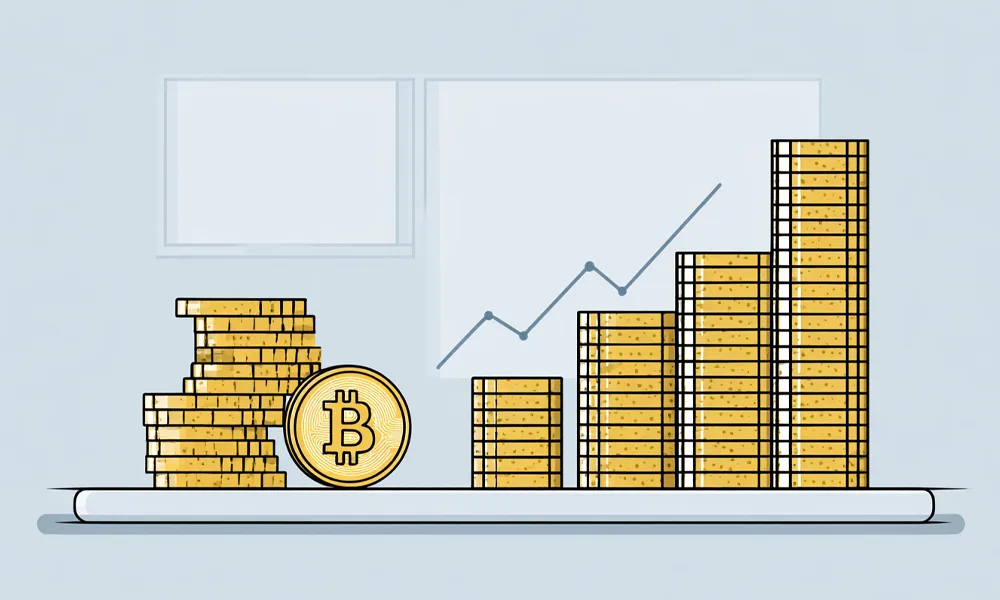
Bitcoin’s security properties come with a cost: it is not the fastest or cheapest cryptocurrency for deposits. Bitcoin blocks average 10 minutes each, with natural variance of 5–25 minutes due to mining randomness. With 2–3 confirmations required, deposit crediting takes 20–40 minutes under normal conditions—and longer during high-congestion periods when low-fee transactions queue behind higher-priority ones.
Transaction fees are set by the market, not by poker sites. The mempool operates as a fee-priority queue: when block space demand exceeds supply, fees rise as users bid for inclusion. During normal conditions, fees typically range $1–10 per transaction. During peak congestion—bull market periods or high on-chain activity events—fees can reach $30–60 or significantly higher. Monitor mempool.space before depositing to assess current conditions.
For players depositing larger amounts where the fee represents a small percentage of the transaction, Bitcoin’s fee structure is operationally acceptable. For players making frequent small deposits, the fee-to-deposit ratio can become unfavorable compared to alternatives like Litecoin or Tron-based stablecoins. This is the primary practical case for using alternative cryptocurrencies at poker sites that accept them.
When Alternative Cryptocurrencies Make More Sense
Litecoin uses Bitcoin’s proof-of-work architecture with 2.5-minute block times and fees typically ranging from $0.05–0.20 per transaction—dramatically lower than Bitcoin in most conditions. For players making multiple smaller deposits per session, Litecoin’s fee structure is materially better. Ethereum settles 12 confirmations in approximately 3 minutes, useful for time-sensitive deposits, but gas fees vary based on DeFi and NFT network activity unrelated to poker. USDT on Tron (TRC-20) offers stablecoin price stability with fees under $1 and fast confirmation, but introduces smart contract risk and network centralization considerations absent from Bitcoin and Litecoin.
| Cryptocurrency | Confirmation Time | Typical Fee Range | Security Model | Primary Trade-off |
|---|---|---|---|---|
| Bitcoin (BTC) | 20–40 min (2–3 confirmations) | $1–10 normal; $30–60+ congestion | Proof-of-Work (highest hash rate) | Slowest confirmation; highest fees |
| Ethereum (ETH) | ~3 min (12 confirmations) | $1–5 normal; gas-dependent | Proof-of-Stake | Gas costs fluctuate with DeFi activity |
| Litecoin (LTC) | 10–15 min (6 confirmations) | $0.05–0.20 | Proof-of-Work (lower hash rate) | Lower absolute security than BTC |
| USDT (TRC-20) | 2–3 min (20 confirmations) | $0.50–1.50 | Delegated Proof-of-Stake | Smart contract risk; centralized reserves |
These comparisons reflect typical network conditions. During high congestion, Bitcoin and Ethereum fees can increase significantly while Litecoin and Tron remain more stable due to lower utilization. The right choice depends on deposit size, timing urgency, and risk tolerance for each network’s specific security assumptions.

What Bitcoin’s Dominance Means for Poker Players Operationally
Bitcoin’s widespread acceptance across poker sites gives it a practical network effect advantage. Players who hold Bitcoin can deposit at virtually any crypto poker site globally without conversion. Players holding niche altcoins face the additional step of either finding a site that accepts their coin or converting first—adding exchange fees and potential delays.
The self-custody tooling for Bitcoin is also the most mature in the ecosystem. Hardware wallets (Ledger, Trezor), multi-signature configurations, and open-source wallet software have had over a decade of security auditing and real-world use. The probability of wallet software bugs or custody infrastructure failures is lower for Bitcoin than for any alternative simply because more eyes have reviewed the code over a longer period.
The processing timeline for Bitcoin withdrawals is consistent: once a site initiates the transaction, on-chain settlement follows the standard 2–3 confirmation window. Unlike fiat payment methods with 24–72 hour processing windows, bank holidays, and weekend delays, Bitcoin withdrawals are processed by the network regardless of time zone or calendar. This predictability matters for bankroll planning.
Address Formats and Compatibility Considerations
Bitcoin has three active address formats: Legacy (P2PKH, starting with “1”), SegWit (P2SH, starting with “3”), and Native SegWit (Bech32, starting with “bc1”). Native SegWit addresses reduce transaction size by approximately 30–40%, resulting in proportionally lower fees. Most modern poker sites support Native SegWit deposits and withdrawals. When generating deposit addresses, verify which format the site uses—sending to an incompatible format can cause delays requiring manual recovery. Always copy addresses directly from the site interface rather than typing them manually.
Bitcoin Deposits at ACR Poker: A Practical Example
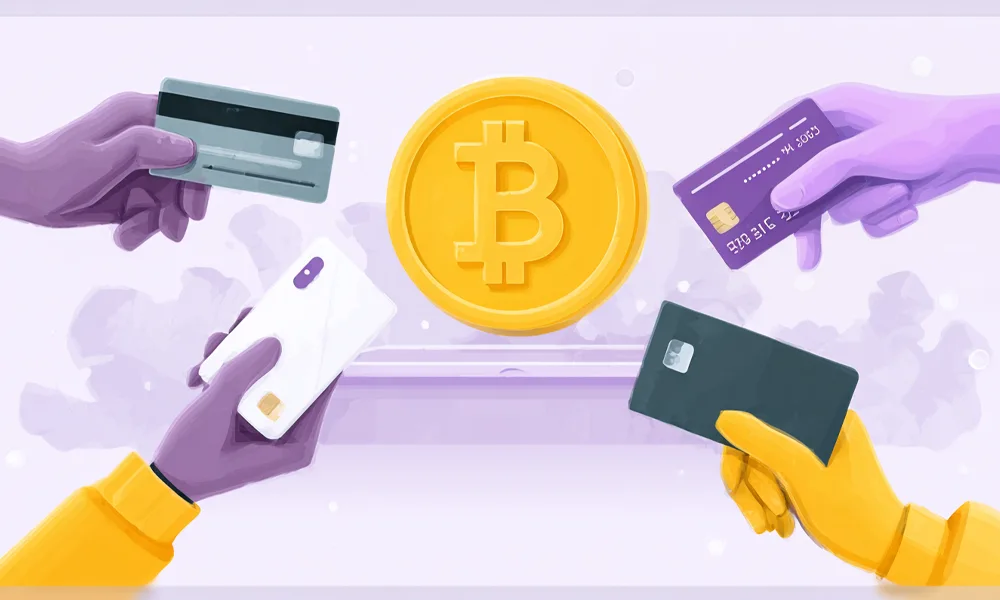
A player plans to deposit for a weekend tournament series. They assess their options and select Bitcoin for the primary deposit based on holding BTC in a hardware wallet and the site’s 2-confirmation requirement.
- Player checks mempool.space Friday afternoon—moderate congestion with next-block fees above baseline but within normal range
- Deposit address generated in ACR Poker account; address verified character-by-character against hardware wallet screen
- Transaction constructed with fee set to 10–15% above the current median rate to ensure timely confirmation without overpaying
- Transaction signed on hardware wallet (private key never exposed to internet-connected device) and broadcast to network
- First confirmation arrives within 12 minutes; second confirmation follows 9 minutes later
- ACR Poker credits deposit automatically upon second confirmation—total elapsed time: 21 minutes
The hardware wallet signing step is the operational differentiator: private keys never touch an internet-connected device, eliminating the primary remote attack vector for fund theft. This is the security model that makes Bitcoin self-custody operationally robust for players holding significant bankroll amounts.
How Professional Poker Players Use Bitcoin vs. Alternatives
Experienced crypto poker players typically maintain Bitcoin as their primary reserve and custody asset, with smaller allocations in faster/cheaper alternatives for operational efficiency. Bitcoin held in cold storage represents the security anchor; Litecoin or stablecoins in a hot wallet handle frequent smaller deposits where fee efficiency matters more than maximum security.
Multi-Currency Strategy
Players who regularly move funds between sites often use a tiered approach: Bitcoin for large transfers where security justifies the fee cost, Litecoin for mid-size frequent deposits where fee savings accumulate meaningfully over time, and stablecoins for situations where price volatility risk between deposit and play is a concern. This strategy is only viable at sites accepting multiple cryptocurrencies—check acceptance policies before structuring your custody allocation around it. The ACR Poker software supports multiple cryptocurrencies, allowing players to implement this approach within a single platform.
Volatility Management
Bitcoin’s price volatility creates a specific operational consideration: the fiat value of a BTC deposit changes between the time you send it and the time you withdraw. A deposit made during a price spike converts to more chips; a withdrawal made during a dip converts to fewer dollars. Players who want to eliminate this variable should use stablecoins (USDT, USDC) for deposits and withdrawals, accepting the trade-offs of centralized reserve risk and smart contract exposure in exchange for price predictability.
Bitcoin’s Role in the Future of Crypto Poker
Bitcoin’s current dominance is grounded in properties—security, liquidity, custody infrastructure, network ubiquity—that are unlikely to change in the near term. The Lightning Network, Bitcoin’s Layer 2 scaling solution, is beginning to appear at select poker platforms and addresses the primary operational friction: confirmation time. Lightning deposits settle in seconds rather than minutes, with fees measured in fractions of a cent, while retaining Bitcoin’s security properties for the underlying funds.
As Lightning Network adoption expands, Bitcoin’s competitive position relative to faster alternatives strengthens further. The confirmation time disadvantage that makes Ethereum or Litecoin attractive for time-sensitive deposits disappears when Lightning is available. The long-term trajectory positions Bitcoin not just as a deposit method but as the settlement layer for an entire ecosystem of instant, low-cost poker payments—maintaining its technical lead while closing the speed and cost gaps that currently favor alternatives.
Frequently Asked Questions
Why do poker sites prefer Bitcoin over other cryptocurrencies?
Poker sites accept Bitcoin because of its network security, liquidity depth, and universal wallet compatibility. Bitcoin’s proof-of-work consensus provides the strongest practical double-spend protection, deepest exchange liquidity reduces conversion friction for players globally, and the maturity of Bitcoin custody infrastructure minimizes integration risk. These operational factors make Bitcoin the lowest-friction option for sites and players simultaneously.
Is Bitcoin safer than other cryptocurrencies for poker deposits?
Bitcoin’s proof-of-work network has the highest accumulated hash rate of any cryptocurrency, making transaction reversal attacks the most expensive in absolute terms. However, “safer” depends on what risk you’re measuring. For network-level attack risk, Bitcoin is strongest. For fee predictability, Litecoin is more stable. For price volatility risk, stablecoins are safer. The right choice depends on which risk dimension matters most for your specific deposit.
Why are Bitcoin transaction fees sometimes very high?
Bitcoin fees are determined by block space demand, not by the transaction amount. Each block holds approximately 1–4 MB of transaction data. When more transactions compete for that space than miners can include, fees rise as users bid for priority. This happens during bull market periods, large on-chain events, or inscription activity. Fees during congestion can reach $30–60 or higher. Check mempool.space before depositing and time transactions for low-activity periods if fee cost is a priority.
Can I use Ethereum instead of Bitcoin for poker deposits?
Ethereum is accepted at most major crypto poker sites and confirms significantly faster than Bitcoin—12 confirmations in approximately 3 minutes versus 20–40 minutes for Bitcoin. Gas fees vary based on Ethereum network activity unrelated to poker, which can make costs unpredictable during DeFi or NFT activity spikes. Ethereum is a practical alternative when you need faster confirmation or when Bitcoin fees are elevated, provided the site accepts ETH deposits.
Does Bitcoin’s price volatility affect my poker bankroll?
Yes. If you deposit BTC and Bitcoin’s price drops before you withdraw, your withdrawal converts to fewer dollars than you deposited in fiat terms—even if your chip stack is unchanged. The reverse also applies: price increases benefit your fiat-denominated return. Players who want to eliminate this variable should use stablecoins like USDT or USDC, accepting smart contract and centralized reserve risks in exchange for price predictability between deposit and withdrawal.
What is the Lightning Network and how does it affect Bitcoin poker deposits?
The Lightning Network is a Layer 2 protocol built on Bitcoin that enables near-instant payments with fees measured in fractions of a cent. Instead of settling every transaction on-chain, Lightning routes payments through off-chain channels that settle to Bitcoin’s base layer periodically. Poker sites integrating Lightning Network deposits eliminate the 20–40 minute confirmation wait, making Bitcoin deposits as fast as any alternative while retaining Bitcoin’s underlying security properties.