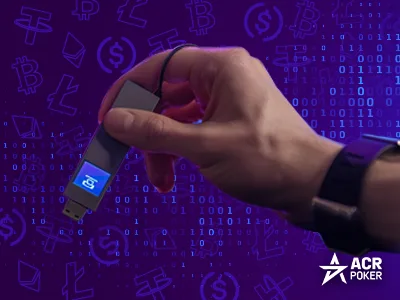



Self-custody wallets give poker players direct control over private keys, eliminating reliance on exchange or site custody. This control comes with absolute responsibility: lost keys mean lost funds with no recovery mechanism. Understanding custody models is fundamental to crypto poker security strategy.
The distinction matters because custodial and non-custodial wallets have inverse risk profiles. Exchange wallets expose you to platform risk—hacks, insolvency, regulatory seizure. Self-custody wallets expose you to operational risk—key loss, theft, user error. Neither model is universally superior. The right choice depends on your security knowledge and fund allocation strategy.
This guide breaks down custody architecture, explains the technical differences between wallet types, and outlines operational security practices professional players use to protect large crypto bankrolls.
How Self-Custody Works at the Protocol Level
Self-custody means you possess the private key that cryptographically proves ownership of blockchain addresses. When you control the private key, you control the funds—no intermediary can freeze, seize, or restrict access. The private key is a 256-bit number that generates your public address through elliptic curve cryptography. Anyone with this key can sign transactions spending your funds.
Custodial wallets work differently. When you deposit to an exchange or poker site’s integrated wallet, you don’t receive private keys. The platform controls the keys and manages a database recording your balance. You trust them to honor withdrawal requests. Your “wallet” is an IOU, not direct blockchain ownership.
The technical architecture creates fundamentally different security models. With self-custody, your security depends on protecting one piece of information—the private key or seed phrase (12-24 words that generate all your keys). With custodial wallets, security depends on the platform’s operational security, regulatory compliance, and financial solvency. You’re trusting their key management, not controlling it yourself.
This is why the crypto industry emphasizes “not your keys, not your coins.” If someone else holds the private keys, they have technical control regardless of legal agreements. Self-custody eliminates counterparty risk but introduces personal responsibility for security operations.
What This Means for Poker Players
For poker bankrolls, custody choice impacts both security and operational efficiency. Self-custody provides maximum security for long-term holdings but requires careful key management. Custodial solutions offer convenience and faster access but concentrate risk in a single platform.
Professional players typically use a hybrid model: self-custody for 70-80% of bankroll in cold storage (offline wallets), custodial or hot wallets for 20-30% of active playing funds. This balances security with accessibility. Cold storage protects the bulk of funds from remote attacks, while hot wallets enable quick deposits without compromising private keys stored offline.
The operational trade-off is time versus security. Accessing cold storage requires physically connecting hardware wallets or retrieving paper wallets from secure locations. This creates intentional friction that protects against impulse decisions and remote compromises. Hot wallets and custodial accounts offer instant access but expand your attack surface.
Common Mistakes Players Make
- Storing seed phrases digitally (screenshots, cloud storage, password managers) which exposes them to malware and remote theft—seed phrases must remain offline
- Using self-custody for 100% of bankroll without understanding key backup procedures, leading to permanent loss when devices fail or are lost
- Keeping large bankrolls on exchange wallets for “convenience” despite exchanges being primary targets for hackers and having history of insolvency
- Writing seed phrases on single pieces of paper stored in one location, creating single points of failure from fire, flood, or theft without geographic redundancy
Types of Self-Custody Wallets
Hardware wallets store private keys on dedicated devices isolated from internet-connected computers. Devices like Ledger or Trezor keep keys in secure elements that never expose them to the host computer. When signing transactions, the operation happens internally on the device. Your computer only receives the signed transaction, never the private key itself.
Software wallets store encrypted keys on your computer or mobile device. Popular options include Electrum (Bitcoin), MetaMask (Ethereum), and Exodus (multi-currency). These wallets are more convenient than hardware solutions but vulnerable to malware, keyloggers, and remote attacks. Security depends entirely on your device’s security posture.
Paper wallets represent the most extreme cold storage—private keys printed or written on physical media and never touching digital systems. These eliminate digital attack vectors but introduce physical security challenges. Paper degrades, ink fades, and physical theft becomes the primary risk. They’re suitable for long-term holdings you won’t access frequently.

Seed Phrase Architecture and Recovery
Modern wallets use BIP39 seed phrases—12 to 24 words from a standardized 2048-word list. This seed phrase generates all your private keys through deterministic derivation. The same seed phrase will always recreate the exact same wallet across any compatible wallet software. This standardization enables recovery if your wallet device fails.
The seed phrase is more valuable than any individual private key because it generates unlimited addresses. If someone obtains your seed phrase, they control every address your wallet ever generated and will generate in the future. This is why seed phrase security is paramount—it’s a master key to your entire cryptocurrency holdings.
Recovery procedures require entering your seed phrase into new wallet software or hardware. Most wallets follow BIP44 derivation paths, ensuring compatible wallets generate identical address sequences. However, some wallets use custom derivation paths. Document which wallet software you used with each seed phrase to ensure successful recovery.
Optional passphrases (sometimes called the “25th word”) add an additional layer of security. The same seed phrase with different passphrases generates completely different wallets. This creates plausible deniability—you can reveal your seed phrase under duress while hiding the passphrase that accesses your real funds. However, losing the passphrase means losing access permanently, even with the seed phrase.
Operational Security Practices
Proper seed phrase storage requires geographic redundancy without creating single points of compromise. Professional players often use the 2-of-3 backup strategy: split the seed phrase across three physical locations (home safe, bank deposit box, trusted family member), where any two locations can reconstruct the phrase but no single location reveals it. This protects against both loss and theft.
Metal seed phrase backups resist fire, water, and corrosion better than paper. Products like Cryptosteel or DIY metal stamping create permanent records. Test your backup before sending funds—recover the wallet from your backup on a separate device to verify you recorded the seed phrase correctly.
Address verification prevents the most common self-custody error: sending funds to wrong addresses. Always verify the first 6 and last 6 characters of deposit addresses before confirming transactions. Malware can replace addresses in your clipboard, causing you to send funds to attacker-controlled addresses. Hardware wallets display addresses on their screens, allowing verification independent of potentially compromised computers.
Deposit Scenario: Moving Funds from Cold Storage
Player needs to deposit $2,000 to ACR Poker for an upcoming series. Funds are stored on a Ledger hardware wallet in cold storage. The player wants to minimize security exposure while ensuring timely deposit confirmation.
- Current cold storage balance: 0.15 BTC (~$6,000)
- Deposit amount needed: 0.05 BTC (~$2,000)
- Network fee estimate: 25 sat/vB (moderate priority)
- Estimated confirmation time: 10-20 minutes (2-3 blocks)
The Technical Process
Player connects Ledger to computer and opens Ledger Live wallet software. Generates new ACR Poker deposit address through account interface. Verifies address on Ledger screen before copying—first 6 characters “bc1q7m” match last 6 “vk8x2p”. Creates transaction sending 0.05 BTC with 25 sat/vB fee. Transaction requires physical confirmation on Ledger device by pressing both buttons simultaneously.
Transaction broadcasts immediately. Ledger disconnects from computer—private keys never left the device. Player monitors transaction in blockchain explorer using transaction ID. First confirmation arrives in 12 minutes, second confirmation 9 minutes later (21 minutes total). ACR Poker credits deposit after second confirmation. Remaining 0.10 BTC stays in cold storage on new change address automatically generated by wallet.
The Outcome
Total deposit time: 21 minutes from transaction creation to funds availability. Network fee cost: $5.20 at 25 sat/vB for a 520-byte transaction. Private keys remained on hardware device throughout entire process—zero exposure to internet-connected computer. Change address automatically generated prevents address reuse, maintaining privacy. Player now has $2,000 active on site with $4,000 remaining in cold storage secured by hardware wallet.
How Professionals Handle Self-Custody
Experienced crypto poker players maintain tiered wallet structures based on access frequency and security requirements. Cold storage holds 70-80% of total bankroll on hardware wallets or paper wallets, accessed only for major rebalancing. Warm storage holds 15-20% on software wallets for medium-term holdings and scheduled deposits. Hot storage or exchange wallets hold 5-10% for immediate access and active play.
Technical Risk Management
Professionals use multisignature wallets for large holdings—requiring signatures from multiple private keys to authorize transactions (e.g., 2-of-3 setup). This eliminates single points of failure. If one key is compromised, funds remain secure. If one key is lost, recovery remains possible using the other keys. Multisig creates operational complexity but dramatically improves security for six-figure bankrolls.
System Optimization
Advanced players maintain separate wallets for deposits and withdrawals, never reusing addresses. They consolidate small UTXOs (unspent transaction outputs) during low-fee periods to reduce future transaction costs. They also maintain detailed records of which seed phrases correspond to which wallets and which derivation paths were used, ensuring successful recovery in emergency situations. Some use passphrase-protected wallets for additional security layers, with different passphrases for different fund allocations.
Technical Evolution in Wallet Custody
Current self-custody solutions require users to manage private keys directly, creating the operational burden of seed phrase security and backup procedures. Social recovery wallets (like Argent on Ethereum) enable account recovery through trusted contacts without exposing seed phrases, reducing loss risk while maintaining self-custody principles.
Multi-party computation (MPC) technology splits private keys across multiple parties where no single party ever possesses the complete key. Transactions require cooperation from multiple key fragments, preventing single points of compromise while eliminating seed phrase vulnerability. MPC maintains self-custody—you control key fragments—without requiring perfect seed phrase security.
As these technologies mature, self-custody will become more accessible to non-technical users. The security benefits of direct ownership will remain without requiring expert-level operational security knowledge. For poker players, this means easier cold storage management with similar security guarantees to current hardware wallet approaches.
Frequently Asked Questions
What happens if I lose my hardware wallet device?
Losing the physical device doesn’t mean losing your funds. Your seed phrase recreates the entire wallet on a new device or compatible software wallet. This is why seed phrase backup is critical—the device is just an interface to your keys.
Order a replacement hardware wallet, enter your seed phrase, and all addresses and balances reappear. However, if you lose both the device and seed phrase backup, funds are permanently unrecoverable.
Can self-custody wallets be hacked remotely?
Hardware wallets storing keys offline cannot be remotely compromised—the private keys never touch internet-connected systems. Software wallets are vulnerable to malware, keyloggers, and remote attacks if your device is compromised.
This is why hardware wallets are recommended for significant holdings. Even if your computer has malware, attackers can’t extract private keys from properly configured hardware wallets because keys never leave the secure element.
Is self-custody legal and do I need to report it?
Self-custody is legal in most jurisdictions—it’s simply holding cryptocurrency directly rather than through intermediaries. However, tax reporting obligations still apply. You must report gains, losses, and transactions regardless of custody method.
Self-custody doesn’t create tax exemptions. Consult tax professionals familiar with cryptocurrency regulations in your jurisdiction. Some countries require reporting large crypto holdings even if held in self-custody.
How do I know if my seed phrase backup is correct?
Test recovery before sending significant funds. After generating a new wallet and recording the seed phrase, send a small test amount (e.g., $20).
Then wipe the wallet or use a different device and recover using your seed phrase backup. If the test funds reappear at the correct address, your backup is valid. This verification step prevents discovering backup errors only after sending large amounts to an unrecoverable wallet.
Should I use a passphrase (25th word) with my seed phrase?
Passphrases add security but increase complexity. The same seed phrase with different passphrases generates completely different wallets. This enables plausible deniability—reveal your seed phrase under duress while protecting your actual passphrase.
However, passphrases create additional backup requirements and increase risk of lockout if forgotten. Use passphrases only if you understand the trade-offs and have reliable passphrase backup procedures separate from your seed phrase backup.
What’s the difference between SegWit and legacy addresses for self-custody?
SegWit addresses (starting with bc1 for Bitcoin) reduce transaction fees by 30-40% compared to legacy addresses (starting with 1). SegWit also enables Lightning Network compatibility. Native SegWit (bc1) provides maximum fee savings.
Wrapped SegWit (starting with 3) offers compatibility with older systems while maintaining some fee benefits. Always use SegWit addresses for new wallets unless you have specific compatibility requirements—there’s no security downside, only fee savings.