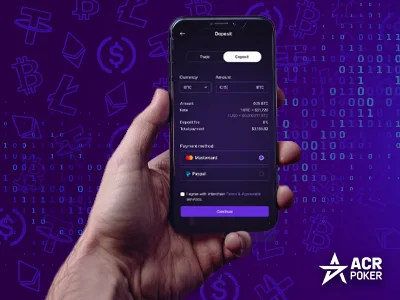



Cryptocurrency deposits and withdrawals in online poker operate through blockchain settlement, not instant payment authorization. When you send funds to a poker site, the transaction must be broadcast to the network, validated by miners or validators, and reach the required confirmation threshold before your account is credited. The same process applies in reverse for withdrawals, with the added step of the site initiating the on-chain transaction from its own wallet infrastructure.
This process differs fundamentally from credit cards or e-wallets, where a central processor authorizes transactions in seconds. Blockchain settlement is decentralized—no single party can approve or reverse a transaction once broadcast. That irreversibility is both the system’s primary security feature and its most operationally significant characteristic for players.
Understanding how each stage works—at the protocol level—eliminates most deposit delays, failed withdrawals, and fee overpayment. This guide breaks down the complete deposit and withdrawal cycle, explains what controls speed and cost at each stage, and identifies where players most commonly encounter problems.

How the Deposit Process Works at the Protocol Level
A crypto poker deposit involves four distinct stages: address generation, transaction broadcast, network confirmation, and account crediting. Each stage has specific technical requirements and distinct failure points.
When you initiate a deposit on ACR Poker software, the site generates a unique receiving address tied to your account. This address is derived from the site’s wallet infrastructure using hierarchical deterministic (HD) key generation, meaning each deposit gets a fresh address without requiring new key creation. You copy this address into your wallet, specify the amount, set a fee rate, and broadcast the transaction.
Once broadcast, the transaction enters the mempool—a distributed pool of unconfirmed transactions waiting for block inclusion. Miners (for proof-of-work chains like Bitcoin) or validators (for proof-of-stake chains like Ethereum) select transactions from the mempool based on fee priority. When your transaction is included in a block, it receives its first confirmation. Each subsequent block adds another confirmation. The site monitors the blockchain and credits your account automatically once the required confirmation threshold is reached.
Confirmation Requirements by Network
Different blockchains require different confirmation counts because their security guarantees and block times vary. The underlying goal is consistent protection against double-spend attacks and chain reorganizations—the specific confirmation count is calibrated to achieve equivalent security across networks with different architectures.
| Cryptocurrency | Typical Confirmations Required | Average Time to Credit | Normal Fee Range |
|---|---|---|---|
| Bitcoin (BTC) | 2–3 confirmations | 20–40 minutes | $1–10 normal; $30–60+ congestion |
| Ethereum (ETH) | 12 confirmations | 3–5 minutes | $1–5 normal; gas-dependent |
| Litecoin (LTC) | 4–6 confirmations | 10–15 minutes | $0.05–0.20 |
| USDT (TRC20) | 20 confirmations | 2–4 minutes | $0.50–1.50 |
These times reflect normal network conditions. During periods of high congestion—typically coinciding with significant market volatility—Bitcoin and Ethereum confirmation times can extend 2–5x while fees spike substantially. Litecoin and Tron-based stablecoins maintain more consistent performance due to lower baseline network utilization.

How the Withdrawal Process Works
Withdrawals involve an additional layer compared to deposits: the site must initiate the on-chain transaction from its own wallet infrastructure before the blockchain settlement process begins. This creates a two-phase process—internal processing by the site, followed by on-chain settlement.
When you submit a withdrawal request, the site validates your account status, checks withdrawal limits, and queues the transaction for execution. The site then constructs and signs a transaction from its hot wallet, broadcasts it to the network, and the standard confirmation process begins. Your wallet receives the funds once the transaction reaches sufficient confirmation depth.
The internal processing phase varies by site and is independent of blockchain speed. Sites batch withdrawals at scheduled intervals (hourly, several times daily, or continuously depending on their infrastructure) to optimize transaction costs and manage hot wallet exposure. During this phase, your funds are queued but not yet on-chain—blockchain explorers won’t show the transaction until after broadcast.
Hot Wallet Architecture and Withdrawal Timing
Sites maintain hot wallets (online, immediately accessible) and cold storage (offline, requiring manual signing). Hot wallets hold enough funds for routine withdrawals; large or unusual withdrawals may require cold storage access, adding processing time. This architecture is a deliberate security trade-off: minimizing hot wallet exposure reduces hack risk but introduces processing latency for larger withdrawals.

What Controls Speed and Cost
Three variables determine how fast and how expensive your deposit or withdrawal will be: the network you choose, the fee rate you set, and current network congestion at the time of the transaction.
Fee rate directly determines miner priority. Bitcoin fees are denominated in satoshis per virtual byte (sat/vB). A transaction at 5 sat/vB during low congestion may confirm in the next block. The same transaction during a congestion spike may sit in the mempool for hours while higher-fee transactions take priority. Tools like mempool.space display real-time fee estimates for different confirmation timeframes—checking before depositing prevents both overpayment and unexpected delays.
Network selection has the largest impact on predictable costs. Bitcoin offers the strongest security guarantees but the highest fee variance. Litecoin provides similar UTXO-based architecture with consistently low fees. Ethereum’s gas market is dynamic but typically fast. Stablecoins on Tron (TRC20) offer the most predictable low-cost transfers, at the cost of introducing smart contract and centralized reserve risk.
The Fee Market During Congestion
Bitcoin’s mempool operates as a fee-priority queue. When block demand exceeds block space capacity (approximately every 10 minutes), transactions compete through fee bidding. During peak demand periods—historically coinciding with bull markets and major network events—fees have spiked from typical ranges of $2–10 to $50–60+ per transaction, making small deposits economically inefficient. The 2021 bull run saw sustained high-fee periods lasting weeks. Monitoring mempool.space before depositing allows you to time transactions during lower-activity windows, typically weekends and late-night UTC hours, when fees drop 50–70% from peak.
What This Means for Your Bankroll Timing
The confirmation model creates timing constraints that don’t exist with traditional payment methods. Crypto deposits require advance planning—arriving at a scheduled tournament with a pending deposit and insufficient confirmation time is a recoverable but avoidable problem.
Professional players maintain pre-funded balances on site rather than depositing on demand. This eliminates confirmation timing risk entirely for planned sessions. For unplanned top-ups, understanding confirmation times by network allows you to choose the right currency for the time available: Ethereum or Litecoin when speed matters, Bitcoin when security and cost optimization matter more.
Withdrawal timing follows a different logic. Because sites process withdrawals in batches, requesting withdrawals outside peak hours often results in faster execution as the queue is shorter. Large withdrawals may require cold storage access—factoring in 24–48 hours for exceptional amounts avoids planning errors.
Common Mistakes Players Make
- Setting minimum fees during network congestion, resulting in 6–12 hour confirmation delays when depositing for time-sensitive sessions or tournaments
- Not verifying the deposit address format before sending—sending BTC to a BCH address or ETH to a BEP-20 address results in permanent fund loss with no recovery path
- Sending test transactions with priority fees then the main transfer with low fees, paying a premium on the wrong transaction while the important one sits in the mempool
- Expecting withdrawal processing to begin immediately—site internal processing queues operate on schedules independent of blockchain speed
- Depositing the exact minimum amount without accounting for network fees deducted from the transaction, resulting in below-minimum credits that require additional deposits

Operational Scenario: Deposit Under Time Pressure
A player needs funds for a tournament starting in 35 minutes. Network conditions show elevated Bitcoin congestion typical during active market periods.
- Mempool shows elevated pending transactions (check mempool.space for real-time status)
- Current fee rate for next-block confirmation: significantly above normal baseline (e.g., 3–5x typical rates)
- Site requires 2 confirmations before crediting (standard for Bitcoin deposits)
- Two confirmations averaging 10–14 minutes each = 20–30 minutes total under normal variance
Decision and Execution
The player checks mempool.space, sees high congestion, and sets a fee rate in the top priority tier to guarantee next-block inclusion. The fee cost represents approximately 2–3% of the deposit amount at current market rates—elevated but operationally justified given the time constraint. Alternatively, the player could switch to Litecoin or Ethereum, which would confirm in under 5 minutes at a fraction of the cost. The Bitcoin route is viable with correct fee prioritization; the alternative network route eliminates confirmation risk entirely.
The Outcome
With priority fees set correctly, first confirmation arrives within 8–12 minutes. Second confirmation arrives 6–14 minutes later. Account is credited 18–26 minutes after broadcast—within the tournament window. Had the player used default wallet fees during congestion, the transaction would likely have remained unconfirmed for 2–6 hours, missing the tournament. The fee premium was the cost of inadequate advance planning rather than a technical failure.
How Professionals Manage the Deposit-Withdrawal Cycle
Experienced crypto poker players treat deposits and withdrawals as a managed system, not ad hoc transactions. The core approach is maintaining an operational balance on-site that covers planned sessions, with periodic replenishment timed to network conditions rather than immediate need.
Fee Optimization Practices
Professionals monitor network congestion before any significant transfer. They deposit during low-activity periods—weekend evenings and late-night UTC hours historically show 50–70% lower fee rates than weekday peaks. They use SegWit (native bech32) addresses for Bitcoin transactions, which reduce transaction size by 30–40% and proportionally reduce fees. For large transfers from cold storage, they consolidate multiple UTXOs into single transactions to avoid paying per-input fees across separate deposits.
Withdrawal Structuring
Rather than withdrawing frequently in small amounts (each withdrawal incurring network fees), professionals batch withdrawals to minimize total fee exposure. They maintain a clear separation between on-site balance (operational, for active play) and cold storage (reserve, for security). Funds exceeding their comfort threshold for hot wallet or site custody are withdrawn on a regular schedule rather than accumulated indefinitely on-platform.
Protocol Developments Affecting Deposits and Withdrawals
Current deposit and withdrawal systems rely on on-chain settlement, which creates the speed-cost trade-off. Layer 2 protocols—Lightning Network for Bitcoin and various rollup solutions for Ethereum—enable near-instant settlement at sub-cent fees by moving transaction execution off the main chain while inheriting its security guarantees.
As poker sites integrate Layer 2 infrastructure, the deposit-withdrawal cycle will compress dramatically: confirmation times measured in minutes will become confirmation times measured in seconds, with fees that are economically irrelevant even for small deposits. This changes bankroll timing constraints entirely, removing the advance-planning requirement that currently characterizes crypto deposits.
However, Layer 2 adoption introduces new complexity: channel liquidity management, different address formats, and routing considerations. Early adoption will favor players with existing technical familiarity. The operational skills that matter now—understanding confirmation mechanics, fee markets, and network selection—will transfer directly to understanding Layer 2 limitations and trade-offs when they become mainstream.
Frequently Asked Questions
Why does my crypto deposit show as confirmed on the blockchain but not credited to my account?
Blockchain confirmation and site crediting are separate events. Sites require a minimum confirmation threshold—typically 2–3 for Bitcoin, 12 for Ethereum—before crediting. If the explorer shows fewer confirmations than the site requires, the deposit is confirmed on-chain but hasn’t yet met the site’s threshold. Wait for additional blocks. If confirmations exceed the requirement and the account still isn’t credited, contact support with the transaction hash.
Can I cancel a crypto deposit after sending it?
No. Once broadcast to the network, blockchain transactions are irreversible. There is no cancellation mechanism. If you sent to the correct address, the deposit will arrive after confirmation. If you sent to a wrong address, the funds are permanently lost—no site, wallet provider, or blockchain participant can recover them. Always verify the receiving address character-by-character before broadcasting, particularly the first and last four characters.
Why is my withdrawal taking longer than my deposit did?
Withdrawals involve a site-side internal processing phase before the on-chain transaction is even broadcast. Sites batch withdrawals on schedules—often hourly or several times per day—to manage hot wallet exposure and optimize transaction costs. Your withdrawal may be queued but not yet on-chain. Once broadcast, confirmation times are identical to deposits. If processing exceeds the stated timeframe, contact support with your withdrawal request ID.
Does it matter which cryptocurrency I use for deposits?
Yes—meaningfully. Bitcoin offers the strongest decentralization and security but the highest fee variance and slowest confirmation times. Litecoin provides similar UTXO architecture with consistently low fees and 10-minute confirmations. Ethereum is fast but gas costs are dynamic. Stablecoins on Tron are the lowest-cost option but introduce centralized reserve and smart contract risk. The right choice depends on your priority: security, speed, cost, or price stability.
What happens if I send the wrong amount—too little or too much?
Sending above the maximum deposit limit may result in the excess being held pending manual review. Sending below the minimum deposit threshold means the site may not credit the amount—you’d need to contact support for manual resolution. Overpayments are generally handled with an additional deposit of the difference rather than triggering issues. Always check minimum and maximum deposit limits before sending, especially when deposit amounts are in BTC terms and the exchange rate has recently shifted.
Are network fees charged by the poker site or the blockchain?
Network fees on deposits are charged by the blockchain, not the site—they compensate miners or validators for including your transaction in a block. The site has no control over deposit fee rates; you set them in your wallet. For withdrawals, the site typically covers or passes through network fees depending on their fee policy. Check the site’s withdrawal fee schedule to understand whether network costs are absorbed or charged separately.