


Online poker sites accept multiple cryptocurrencies, each with distinct technical characteristics that affect deposit speed, transaction costs, and settlement finality. Bitcoin remains the most widely accepted, but Ethereum, Litecoin, Bitcoin Cash, and stablecoins like USDT and USDC offer different trade-offs in confirmation times, fee structures, and volatility exposure.
The cryptocurrency you choose impacts your operational experience. Bitcoin deposits require 2-3 confirmations (20-30 minutes average) with fees ranging from $0.50 to $15 depending on network congestion. Ethereum confirms faster (12 confirmations in approximately 3 minutes) but introduces gas fee volatility and smart contract complexity. Litecoin offers a middle ground with 6 confirmations in 15 minutes and consistently lower fees. Stablecoins eliminate price volatility but add counterparty and regulatory risk.
This guide examines the technical specifications, consensus mechanisms, and operational implications of each major cryptocurrency accepted for online poker. You’ll understand why sites require different confirmation counts, how fee markets affect transaction costs, and which cryptocurrency aligns with your deposit timing and risk tolerance requirements.
Bitcoin (BTC): The Foundation Standard
Bitcoin operates on a proof-of-work consensus mechanism with 10-minute average block times. Poker sites typically require 2-3 confirmations before crediting deposits, translating to 20-30 minutes under normal network conditions. This confirmation requirement exists because Bitcoin’s probabilistic finality means recent blocks can be reorganized—three confirmations provide 99.98% certainty against reversal.
Transaction fees fluctuate based on mempool congestion. During low-activity periods, transactions confirm with fees as low as 1-5 satoshis per byte ($0.25-$1.25 for typical deposits). During network congestion—common during price rallies or high on-chain activity—fees can spike to 50-150 sat/vB ($12-$35). Players monitoring mempool.space or similar tools can time deposits during low-congestion windows to minimize costs.
Bitcoin offers maximum decentralization and the longest operational history (since 2009), making it the most trust-minimized option. The network has never experienced a consensus failure or successful 51% attack at scale. For players prioritizing security over speed, Bitcoin remains the optimal choice despite longer confirmation times.
SegWit addresses (starting with bc1) reduce transaction fees by approximately 30-40% compared to legacy addresses. Players using SegWit-compatible wallets benefit from lower costs without sacrificing security or compatibility with poker sites.

Ethereum (ETH): Fast Confirmations with Gas Complexity
Ethereum transitioned to proof-of-stake consensus in September 2022, producing blocks every 12 seconds. Sites require 12-64 confirmations depending on their risk tolerance, with most settling around 12 confirmations (approximately 2.4 minutes). This speed advantage makes Ethereum attractive for players needing rapid deposit access.
Gas fees—Ethereum’s transaction cost mechanism—operate differently from Bitcoin’s sat/vB model. Fees are calculated as: Gas Used × Gas Price (in Gwei) × ETH Price. Simple ETH transfers consume approximately 21,000 gas units. At 20 Gwei gas price and $3,000 ETH, a transfer costs roughly $1.26. However, gas prices can spike to 100-300 Gwei during network congestion, increasing costs to $6-$18 per transaction.
Ethereum’s proof-of-stake provides stronger finality guarantees than Bitcoin’s proof-of-work. After finalization (2 epochs, approximately 12.8 minutes), reversing transactions requires destroying at least one-third of staked ETH—an economically prohibitive attack. This explains why sites can safely accept fewer confirmations compared to Bitcoin.
The main operational risk is gas fee volatility. Players should check current gas prices via etherscan.io/gastracker before initiating deposits. Transaction timing matters significantly—gas fees are typically 50-70% lower during weekends and off-peak hours (2-8 AM UTC).
Litecoin (LTC): The Speed-Cost Compromise
Litecoin operates on Bitcoin’s codebase with modified parameters: 2.5-minute block times (4x faster than Bitcoin) and a different hashing algorithm (Scrypt vs SHA-256). Sites typically require 6 confirmations, resulting in 15-minute average deposit times—faster than Bitcoin but with similar security properties.
Transaction fees remain consistently low due to Litecoin’s larger block capacity relative to transaction demand. Typical fees range from $0.02-$0.10 regardless of network conditions. This predictability makes Litecoin ideal for players making frequent smaller deposits where Bitcoin’s fee variance would be cost-prohibitive.
Litecoin uses the same UTXO model as Bitcoin, making it familiar to players experienced with Bitcoin. Address formats differ (L or M prefix for legacy, ltc1 for SegWit), but operational processes mirror Bitcoin’s mechanics. The network has maintained 100% uptime since 2011 with no consensus failures.
The main trade-off is lower hash rate compared to Bitcoin, theoretically making 51% attacks more feasible. In practice, the cost of attacking Litecoin remains economically prohibitive, and the 6-confirmation requirement provides equivalent security to 3 Bitcoin confirmations for typical poker deposit amounts.

Bitcoin Cash (BCH): Large Blocks, Low Fees
Bitcoin Cash forked from Bitcoin in 2017 to increase block size limits, allowing more transactions per block and reducing fee pressure. Block times remain 10 minutes, with sites requiring 6-15 confirmations (60-150 minutes) due to lower hash rate compared to Bitcoin.
Transaction fees consistently remain under $0.01 regardless of network activity. The larger block capacity (32MB vs Bitcoin’s approximately 4MB with SegWit) means fee markets rarely develop. For players prioritizing cost over confirmation speed, Bitcoin Cash offers the lowest per-transaction fees among major cryptocurrencies.
The longer confirmation requirements reflect Bitcoin Cash’s lower security budget. With approximately 1-2% of Bitcoin’s hash rate, the network is theoretically more vulnerable to reorganization attacks. Sites compensate by requiring more confirmations to achieve equivalent security. For deposits under $10,000, the additional confirmation time poses minimal practical risk.
Bitcoin Cash uses the same address formats as Bitcoin (legacy and CashAddr), but CashAddr format (starting with bitcoincash:) prevents accidental sends to Bitcoin addresses. Always verify address compatibility before sending to avoid permanent loss.
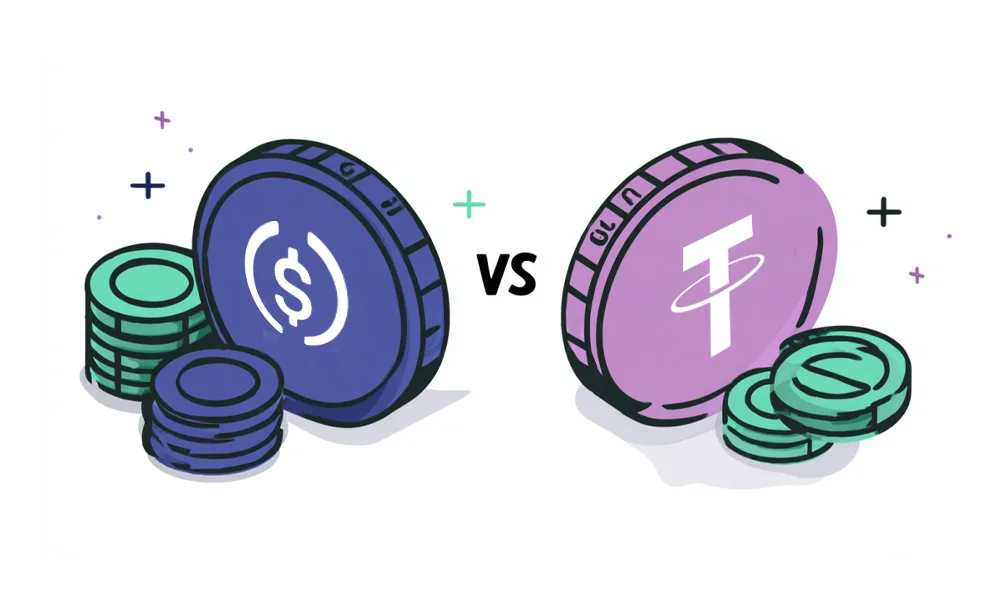
Stablecoins: USDT and USDC
Tether (USDT) and USD Coin (USDC) are fiat-pegged cryptocurrencies designed to maintain 1:1 value with the US dollar. They operate as tokens on multiple blockchains—most commonly Ethereum (ERC-20), Tron (TRC-20), and Binance Smart Chain (BEP-20). Each network has different confirmation requirements and fee structures.
USDT on Ethereum requires 12 confirmations (approximately 3 minutes) with gas fees identical to ETH transfers ($1-$18 depending on congestion). USDT on Tron confirms faster (1 confirmation, approximately 3 seconds) with near-zero fees ($0.10-$1), making it popular for frequent small deposits. USDC operates similarly, primarily on Ethereum with 12-confirmation requirements.
The primary advantage is elimination of price volatility. Players can maintain exact bankroll values without exposure to cryptocurrency price fluctuations. A $1,000 USDC deposit remains $1,000 regardless of market conditions, whereas $1,000 in Bitcoin could be $950 or $1,050 hours later.
The trade-off is counterparty risk. Both USDT and USDC are issued by centralized entities (Tether Limited and Circle) that hold dollar reserves backing the tokens. If the issuer faces insolvency, regulatory action, or reserve mismanagement, tokens could depeg from $1. Additionally, issuers can freeze specific addresses on-chain, introducing censorship risk absent in Bitcoin or Ethereum.
Stablecoins suit players who want crypto’s speed and privacy benefits without volatility exposure. They’re optimal for bankroll management strategies requiring stable fiat-equivalent values.
What This Means for Your Deposits
Cryptocurrency selection depends on your priority hierarchy: speed, cost, volatility, or decentralization. Bitcoin maximizes security and decentralization at the cost of slower confirmations and variable fees. Ethereum offers speed but introduces gas fee unpredictability. Litecoin balances speed and cost with moderate security. Stablecoins eliminate volatility but add counterparty risk.
Network congestion creates timing considerations. Bitcoin and Ethereum fees can increase 3-10x during peak periods, making Litecoin or Tron-based USDT more cost-effective for time-sensitive deposits. Players who monitor network conditions and maintain balances across multiple cryptocurrencies can optimize for current market conditions.
Withdrawal timing matters for volatile cryptocurrencies. Withdrawing Bitcoin during a price dip locks in lower fiat value; withdrawing during peaks maximizes value. Stablecoins eliminate this consideration but require trust in the issuing entity. Professional players often deposit with stablecoins for stability and withdraw to Bitcoin for long-term appreciation potential and self-custody security.
Common Mistakes Players Make
- Sending ERC-20 USDT when the site expects TRC-20 USDT—tokens arrive on different networks and require manual recovery, delaying access by 24-72 hours
- Depositing Bitcoin with minimum fees during network congestion, causing 6-12 hour confirmation delays when attempting to register for time-specific tournaments
- Not verifying address format compatibility—sending Bitcoin Cash to a Bitcoin address or vice versa results in permanent loss unless both addresses are controlled by the same entity
- Assuming all stablecoins are equivalent—USDT, USDC, DAI, and BUSD have different risk profiles, reserve structures, and regulatory exposures that affect long-term holding safety
Network Confirmation Requirements Explained
Different confirmation counts reflect the relationship between block time, hash rate, and economic security. Bitcoin’s 10-minute blocks combined with massive hash rate allow 2-3 confirmations to provide high security. Litecoin’s 2.5-minute blocks require 6 confirmations to achieve equivalent security—same total time, different granularity.
Ethereum’s proof-of-stake finality mechanism provides stronger guarantees than proof-of-work, explaining why 12 confirmations (2.4 minutes) suffices despite the shorter time window. Once finalized, reversing Ethereum transactions requires destroying billions of dollars in staked ETH—economically impossible under current network conditions.
Sites set confirmation requirements based on deposit amount risk. Small deposits ($50-$500) may credit after 1-2 confirmations due to low fraud incentive. Large deposits ($5,000+) require full confirmation counts to protect against sophisticated attacks. Some sites use tiered confirmation systems: 1 confirmation for play credit, 3+ for withdrawals.
Fee Market Dynamics Across Cryptocurrencies
Bitcoin and Ethereum use dynamic fee markets where users bid for block space during congestion. Litecoin and Bitcoin Cash have excess block capacity, creating stable low fees. Tron operates similarly with consistently low fees due to high throughput (approximately 2,000 transactions per second vs Ethereum’s 15-30 TPS).
Understanding fee markets prevents overpaying. Bitcoin fees below 5 sat/vB suffice during low activity but cause multi-hour delays during congestion. Ethereum gas prices below 20 Gwei work off-peak but fail during high-demand periods. Tools like mempool.space (Bitcoin) and etherscan.io/gastracker (Ethereum) show real-time fee requirements for target confirmation times.
Transaction batching reduces per-deposit costs for players making multiple deposits. Instead of five separate 0.01 BTC deposits (5x fees), consolidating to one 0.05 BTC deposit saves 80% on fees. This technique works for all UTXO-based cryptocurrencies (Bitcoin, Litecoin, Bitcoin Cash).
Deposit Scenario: Choosing the Right Cryptocurrency
Player needs to deposit $1,000 for a tournament starting in 30 minutes. Current network conditions show varied options.
- Bitcoin: 45 sat/vB fee ($10.80), estimated 2-confirmation time: 20-30 minutes
- Ethereum: 35 Gwei gas ($2.20), estimated 12-confirmation time: 2-4 minutes
- Litecoin: 0.001 LTC fee ($0.07), estimated 6-confirmation time: 15-20 minutes
- USDT (Tron): 1 TRX fee ($0.20), estimated 1-confirmation time: 3-5 minutes
The Technical Process
Player selects USDT on Tron for optimal speed-cost balance. Transaction broadcasts and confirms within 3 seconds (first confirmation). Site credits deposit after 1 confirmation due to Tron’s high throughput and delegated proof-of-stake consensus. Total elapsed time: 3 minutes including wallet interaction.
The Outcome
Player successfully registers for tournament with 27 minutes to spare. Total cost: $0.20 fee. Alternative scenarios: Bitcoin would have succeeded with higher cost ($10.80) and moderate time pressure. Ethereum would have succeeded at moderate cost ($2.20). Litecoin would have created time pressure (15-20 minutes leaves little buffer). The choice of Tron-based USDT optimized for both speed and cost in this specific situation.
How Professionals Handle Cryptocurrency Selection
Experienced players maintain balances across multiple cryptocurrencies to optimize for current conditions. Hot wallets hold Bitcoin (for security and long-term holding), USDT on Tron (for speed), and Litecoin (for cost-effective medium-speed deposits). This diversification allows tactical selection based on urgency and network conditions.
Technical Risk Management
Professionals never hold large amounts in stablecoins long-term due to counterparty risk. USDT and USDC serve as deposit vehicles, not storage assets. After depositing, excess funds convert to Bitcoin or withdraw to self-custody. This limits exposure to issuer risk while maintaining stablecoin benefits for transactions.
System Optimization
Advanced players use multiple deposit addresses across cryptocurrencies, maintaining parallel balances. They monitor fee markets continuously and select the optimal cryptocurrency for each deposit based on real-time conditions. They also exploit arbitrage opportunities—depositing with undervalued cryptocurrencies during market dislocations to gain slight value advantages.
Technical Evolution in Cryptocurrency Acceptance
Current deposit systems rely on Layer 1 blockchain settlement, creating inherent speed-cost trade-offs. Lightning Network (Bitcoin) and Layer 2 rollups (Ethereum) enable instant settlement with sub-cent fees by batching transactions off-chain and settling periodically on the main chain. These protocols sacrifice some security assumptions for dramatic efficiency improvements.
As poker sites integrate Layer 2 solutions, deposit confirmation times will drop from minutes to seconds while maintaining security. Lightning Network adoption is growing—early implementation by major sites will allow Bitcoin deposits to confirm instantly at negligible cost. Ethereum’s Layer 2 ecosystem (Arbitrum, Optimism, zkSync) will similarly enable instant ETH and stablecoin deposits.
The long-term trend favors instant, low-cost settlement without sacrificing security. Players should monitor Layer 2 adoption as sites announce integration. Understanding the technical trade-offs of different scaling solutions—Lightning’s liquidity requirements vs rollup’s trust assumptions—will become increasingly important as these technologies deploy.
Frequently Asked Questions
Why do poker sites accept multiple cryptocurrencies instead of just Bitcoin?
Different cryptocurrencies serve different player needs. Bitcoin maximizes decentralization and security but has slower confirmations and variable fees. Ethereum and Litecoin offer faster confirmations.
Stablecoins eliminate volatility for players who want crypto’s speed without price risk. Sites support multiple options because no single cryptocurrency optimally serves all players—technical trade-offs mean optimal choice varies by deposit urgency, amount, and risk tolerance.
Can I deposit one cryptocurrency and withdraw a different one?
Yes, most sites allow deposits and withdrawals in different cryptocurrencies. Your account balance is denominated in dollars (or the site’s base currency), and cryptocurrency serves as the payment rail. You can deposit Bitcoin and withdraw USDT, or any other combination.
The site handles conversion at current market rates, though some charge small conversion fees (typically 1-2%) for switching between volatile cryptocurrencies and stablecoins.
Are stablecoins as safe as Bitcoin for poker deposits?
Stablecoins have different risk profiles. Bitcoin has no counterparty risk—the network validates transactions through decentralized consensus. Stablecoins depend on centralized issuers maintaining dollar reserves and can face regulatory seizure or issuer insolvency.
For deposits and short-term holdings (hours to days), this risk is minimal. For long-term storage (weeks to months), Bitcoin offers superior security. Use stablecoins for transactions, Bitcoin for savings.
Why does Ethereum sometimes have higher fees than Bitcoin?
Ethereum’s fee mechanism differs from Bitcoin’s. Gas fees depend on network congestion and smart contract activity, not just payment transactions. During DeFi booms, NFT mints, or major token launches, Ethereum gas prices spike dramatically as complex smart contracts compete for block space.
Bitcoin fees reflect payment transaction demand only. Ethereum fees are more volatile but average lower during normal conditions.
How do I know which network to use for USDT deposits?
Check the deposit page carefully—sites specify required networks (ERC-20, TRC-20, BEP-20). Sending USDT on the wrong network causes delays and requires manual recovery. ERC-20 (Ethereum) has higher fees but maximum compatibility.
TRC-20 (Tron) has near-zero fees and fast confirmations. BEP-20 (Binance Smart Chain) offers middle-ground speed and cost. Most sites support multiple networks—choose based on your wallet’s capabilities and fee preferences. Always verify before sending.
Do cryptocurrency prices affect my poker bankroll?
Yes, if you hold volatile cryptocurrencies in your poker account. Sites typically show balances in dollars but hold actual cryptocurrency. If Bitcoin drops 10% while you have funds on-site, your effective bankroll decreases 10%.
Stablecoins eliminate this risk—$1,000 USDC remains $1,000 regardless of market conditions. Players sensitive to volatility should deposit with stablecoins or withdraw volatile cryptocurrencies immediately after sessions.