



Keeping cryptocurrency on a poker platform means trusting the platform with your private keys. You don’t hold them—the platform does. This is the fundamental trade-off between custodial (platform) and non-custodial (self-custody wallet) models: convenience versus control. Neither is universally superior. The right choice depends on your fund allocation, technical comfort level, and risk tolerance.
Platform custody introduces counterparty risk. If the platform experiences a hack, insolvency, or regulatory seizure, your funds are exposed to outcomes you can’t control. Self-custody eliminates counterparty risk but replaces it with operational risk—key loss, device compromise, or user error. These are inverse risk profiles, and understanding them is the starting point for any serious crypto poker security strategy.
This guide explains the technical architecture behind both custody models, breaks down the real risk surfaces in each, and outlines how experienced players allocate funds across custody types based on amount, access frequency, and operational maturity.

What Custody Actually Means in Crypto
In traditional finance, custody means a third party holds your assets—a bank, brokerage, or exchange. In crypto, custody is defined by who controls the private keys. Private keys are cryptographic credentials that authorize transactions on the blockchain. Whoever holds the private keys controls the funds—no exceptions, no recovery mechanisms.
When you deposit Bitcoin to a poker platform, the site credits your account balance in its internal ledger, but the on-chain funds move to addresses controlled by the platform’s key management infrastructure. Your account balance is a database entry, not a blockchain balance. The distinction matters: if the platform’s systems fail, your claim to those funds depends on the platform’s solvency and operational continuity—not on the blockchain.
Self-custody means you generate and control your own private keys. Your wallet software derives keys from a seed phrase (typically 12 or 24 words). The blockchain recognizes your address; no platform intermediary is involved. The trade-off is absolute: full control means full responsibility. There is no “forgot password” recovery for a lost seed phrase.
Platform Custody: Risk Architecture
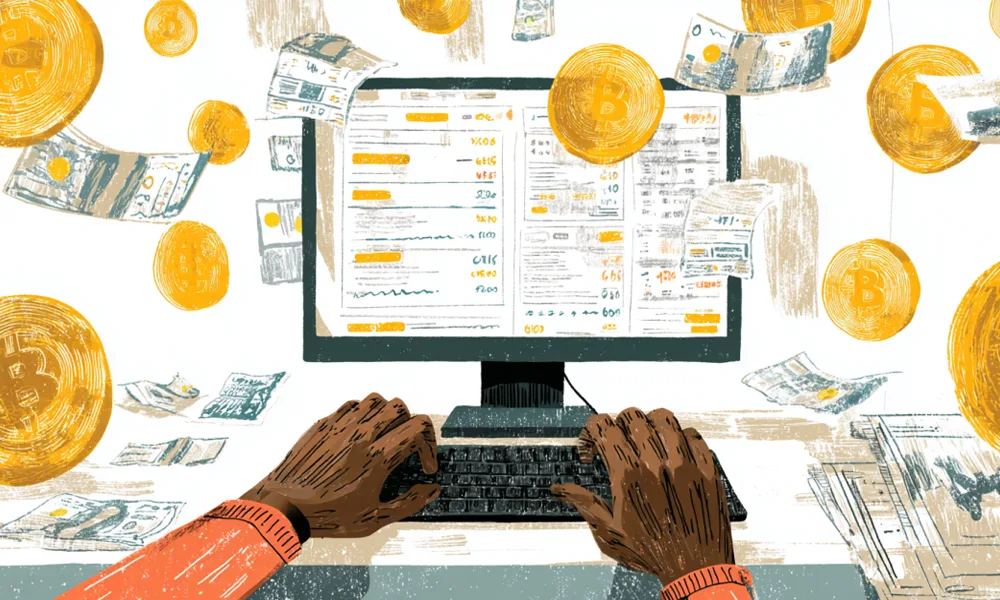
Poker platforms hold player funds in hot wallets (internet-connected, for operational liquidity) and cold storage (offline, for reserves). The ratio varies by platform and is rarely disclosed. Hot wallets are necessary for processing withdrawals but represent the primary attack surface—they’re connected to the internet and require active key management systems that can be compromised.
The Historical Record on Exchange and Platform Hacks
Platform custody risk is not theoretical. Centralized platforms managing large crypto balances have been compromised repeatedly across the industry. The consistent pattern: hot wallet exposure is the primary vector, and user funds held in those wallets are the primary loss. Cold storage funds are generally recovered because offline keys can’t be accessed remotely. Players holding large balances on any single platform accept concentrated exposure to that platform’s security practices, which they cannot independently audit.
Regulatory and Operational Risk
Beyond hacking, platform custody introduces regulatory risk. Poker sites operating across multiple jurisdictions can face account freezes, payment processor restrictions, or regulatory actions that temporarily or permanently prevent withdrawals. Operational failures—banking partner issues, technical outages, compliance holds—can also delay access to platform-held funds. None of these risks exist with self-custody; blockchain-held funds are accessible as long as you have your private keys and an internet connection.
Self-Custody: Risk Architecture
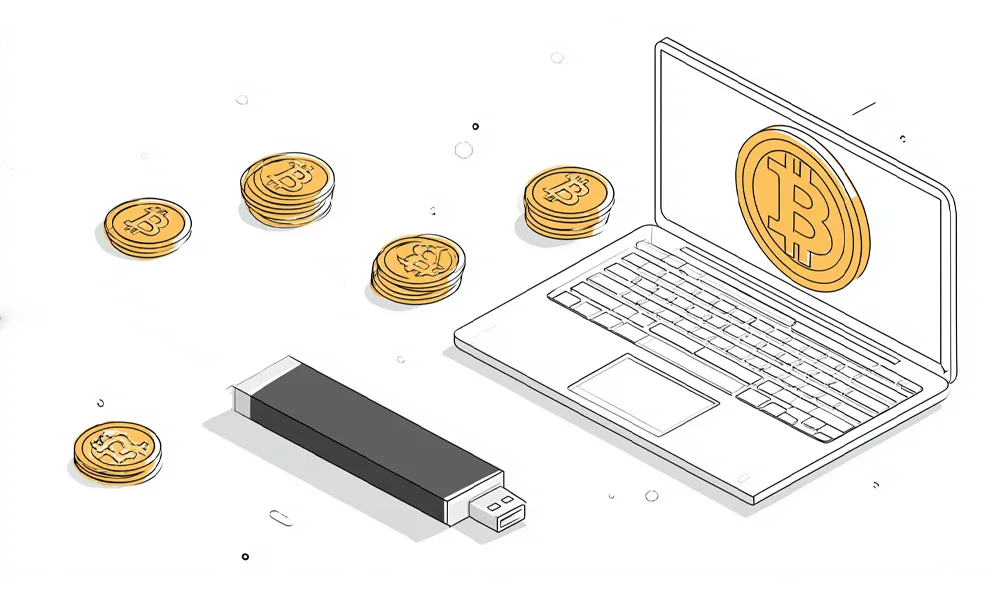
Self-custody wallets come in two primary types: software wallets (hot) and hardware wallets (cold). Software wallets store private keys in encrypted form on your device—phone or computer. Hardware wallets store keys in an offline secure element, signing transactions without exposing keys to internet-connected systems.
Software Wallet Risk Profile
Software wallets are convenient for frequent transactions but maintain an attack surface. Keys are stored on a device that connects to the internet. Malware designed to extract wallet credentials is a documented threat category. Browser extensions, clipboard hijackers (replacing copied addresses), and phishing attacks targeting wallet interfaces are active vectors. The risk is manageable with good operational security but not eliminable. Software wallets are appropriate for active bankroll portions—amounts you need for regular deposits and withdrawals.
Hardware Wallet Risk Profile
Hardware wallets store private keys in a tamper-resistant chip that never exposes them to connected devices. When signing a transaction, the hardware wallet processes it internally and outputs only the signed transaction—never the key itself. This eliminates remote compromise vectors. The remaining risks are physical: device loss, physical theft, or destruction without a backup seed phrase. Hardware wallets are appropriate for reserves—funds you don’t need immediate access to.
Seed Phrase Security: The Non-Negotiable Requirement
Both software and hardware wallets derive all keys from a seed phrase. If your device is lost, destroyed, or compromised, the seed phrase is the only recovery mechanism. Seed phrases must be stored offline (paper or metal backup), in a physically secure location, never photographed or stored digitally. This is where most self-custody failures occur—not from sophisticated attacks, but from inadequate seed phrase backup practices. Self-custody without a secure seed phrase backup is operationally equivalent to holding funds with no recovery path.

Comparing the Risk Profiles Side by Side
The decision between platform and self-custody isn’t binary—most players use both, with allocation determined by use case. The following comparison clarifies the trade-offs across the dimensions that matter for poker players:
| Dimension | Platform Custody | Self-Custody (Software) | Self-Custody (Hardware) |
|---|---|---|---|
| Key Control | Platform holds keys | You hold keys (device) | You hold keys (offline chip) |
| Primary Risk | Platform hack/insolvency | Device malware/compromise | Physical loss without backup |
| Deposit Speed | Instant (internal transfer) | 10–60 min (on-chain) | 10–60 min (on-chain) |
| Recovery Option | Platform support (if solvent) | Seed phrase only | Seed phrase only |
| Regulatory Exposure | Subject to platform jurisdiction | None (blockchain-native) | None (blockchain-native) |
| Best For | Active playing bankroll | Frequent deposits/withdrawals | Long-term reserves |
The table reflects general characteristics. Actual platform security varies significantly—some platforms use multi-signature cold storage with audited key management; others operate with minimal security infrastructure. Players have no reliable way to assess platform security from the outside, which is a structural limitation of platform custody.
Real-World Scenario: Evaluating Allocation for a Regular Player
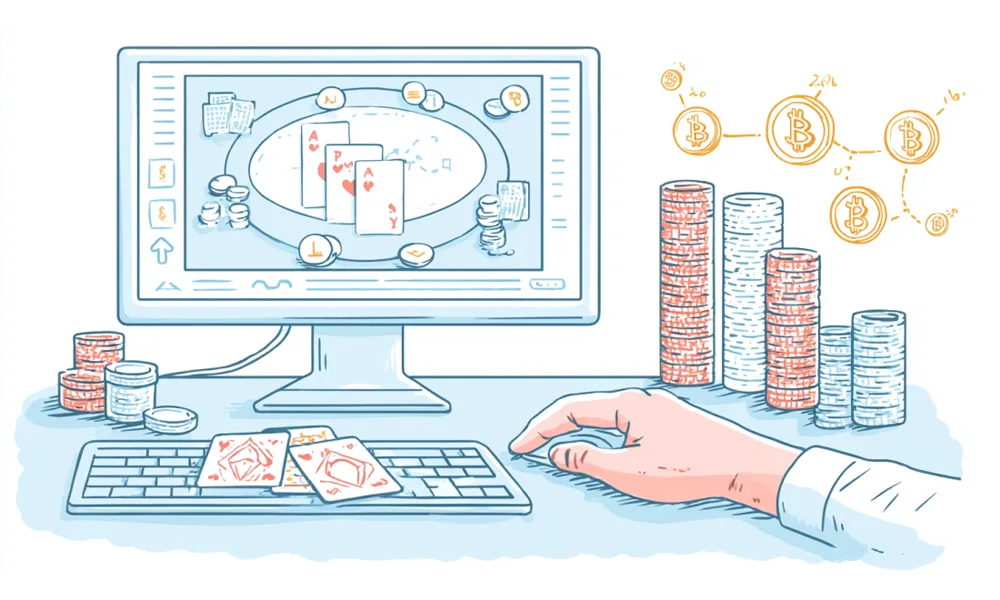
A player maintains a total crypto bankroll across platform and personal wallets. They play regularly—several sessions per week—and need consistent access to platform funds. Their total holdings across all wallets represent a meaningful financial asset relative to their overall net worth.
- Active playing bankroll (used for regular sessions): held on platform for immediate access
- Short-term reserve (next 30 days of planned deposits): held in software wallet for fast on-chain transfers
- Long-term reserve (holdings beyond active bankroll): held in hardware wallet in cold storage
- Seed phrases for both wallets: stored on metal backup plates in physically separate secure locations
The Technical Process
When the platform balance runs low after a downswing, the player transfers from the software wallet to the platform—a standard on-chain transaction confirming in 20–60 minutes. Monthly, they refill the software wallet from the hardware wallet during a scheduled window, connecting the hardware device only for the duration of the transaction. The hardware wallet seed phrase has never been photographed, typed into any device, or stored digitally.
The Outcome
Platform exposure is limited to the active playing bankroll—the amount the player is comfortable losing access to in a worst-case platform failure scenario. The bulk of holdings sit in self-custody, insulated from platform risk. The operational cost is the 20–60 minute confirmation window for deposits and the discipline required to maintain proper seed phrase security. This allocation model treats platform custody as a convenience layer, not a storage solution.
How Professional Players Structure Custody
Experienced players approach custody as a risk management system rather than a binary choice. The consistent principle: minimize platform exposure to what you need for active play, and hold reserves in self-custody proportional to your risk tolerance and technical comfort.
Technical Allocation Principles
A common framework: platform holdings stay at or below the buy-in for your regular stake level multiplied by your standard session count. This limits platform exposure to an amount you’d be prepared to lose in a single bad run—making a platform failure financially comparable to a severe downswing rather than a catastrophic loss. Everything above that threshold moves to self-custody, tiered between software wallets (accessible) and hardware wallets (secure).
Operational Security Practices
Players using ACR Poker software should treat their platform balance as working capital, not savings. Withdraw excess funds after significant wins rather than accumulating large platform balances. Use withdrawal scheduling—platforms often process crypto withdrawals in batches, so timing withdrawals to known processing windows reduces wait time. For self-custody, use dedicated devices where possible: a hardware wallet paired with a clean software wallet installation on a device used exclusively for crypto management reduces malware exposure significantly.
The Evolution of Custody Models in Poker
Current platform custody operates on a trust model: players trust the platform’s security, solvency, and regulatory stability. This model has structural limitations that technology is beginning to address. Proof-of-reserves systems—where platforms cryptographically prove their on-chain holdings match user balances—are emerging as an accountability mechanism, though adoption in the poker industry remains limited.
Non-custodial poker protocols built on smart contracts represent a longer-term evolution: funds held in audited smart contracts rather than platform-controlled wallets, with outcomes enforced by code rather than trust. These systems eliminate platform custody risk but introduce smart contract risk and require significant user technical literacy. They exist at the experimental stage for poker specifically, but the trajectory points toward custody models that don’t require trusting a centralized operator.
For players today, the practical implication is straightforward: self-custody technology is mature, accessible, and well-documented. The barrier is operational discipline, not technical complexity. Players who invest time in understanding wallet security gain meaningful control over custody risk that no platform-side improvement can replicate.
Frequently Asked Questions
What happens to my platform balance if the poker site is hacked?
It depends on which wallets were compromised. Funds in platform hot wallets are at direct risk—if those keys are stolen, on-chain funds move irreversibly. Cold storage funds are typically protected because offline keys can’t be accessed remotely. Your account balance may be partially or fully unrecoverable depending on the platform’s insurance, reserves, and cold-to-hot ratio. There is no blockchain mechanism to reverse a completed theft transaction.
Is a hardware wallet necessary, or is a software wallet sufficient?
Software wallets are adequate for amounts you actively move between platform and personal storage. The threshold where hardware wallets become appropriate depends on your risk tolerance—specifically, the amount at which a software wallet compromise would represent a significant loss relative to your overall financial position. Hardware wallets eliminate remote attack vectors entirely; software wallets don’t. Players holding multi-session reserves in self-custody typically use hardware wallets for that portion.
Can I recover funds from a self-custody wallet if I lose my device?
Yes—if you have your seed phrase. The seed phrase is the only recovery mechanism. Install the same wallet software on a new device, enter the seed phrase during recovery, and the wallet restores with full access to your funds. If you lose both the device and the seed phrase, the funds are permanently inaccessible. No wallet provider, blockchain developer, or platform can recover funds without the seed phrase. This is why secure seed phrase backup is the single most important step in self-custody setup.
Does keeping funds on the platform affect my ability to claim bonuses?
Platform balance and bonus eligibility are independent systems. Bonuses are typically tied to deposit events and wagering activity, not to how much you maintain on the platform between sessions. Withdrawing funds between sessions doesn’t forfeit earned bonuses, though active bonus clearing periods may have specific requirements. Check platform bonus terms for any minimum balance or activity requirements before structuring a withdrawal schedule around bonus optimization.
What is a seed phrase and why does it matter so much?
A seed phrase (also called a recovery phrase or mnemonic) is a sequence of 12 or 24 words generated when you create a self-custody wallet. It encodes the master private key from which all wallet addresses and keys are mathematically derived. Anyone with your seed phrase has full, irrevocable access to all funds in that wallet—past, present, and future addresses. It must be stored offline, physically secured, never shared, and never entered into any website or application other than your wallet’s recovery interface.
How much should I keep on the platform versus in self-custody?
There’s no universal figure—it depends on your stake level, session frequency, and risk tolerance. A practical framework: keep on the platform only what you’d need for your next 1–3 sessions. This limits platform exposure to an amount comparable to a normal downswing. Hold everything above that threshold in self-custody, split between a software wallet (for near-term deposits) and a hardware wallet (for longer-term reserves). Adjust the ratio as your bankroll grows and your custody operational maturity improves.
How Professional Players Structure Custody
Experienced players approach custody as a risk management system rather than a binary choice. The consistent principle: minimize platform exposure to what you need for active play, and hold reserves in self-custody proportional to your risk tolerance and technical comfort.
Technical Allocation Principles
A common framework: platform holdings stay at or below the buy-in for your regular stake level multiplied by your standard session count. This limits platform exposure to an amount you’d be prepared to lose in a single bad run—making a platform failure financially comparable to a severe downswing rather than a catastrophic loss. Everything above that threshold moves to self-custody, tiered between software wallets (accessible) and hardware wallets (secure).
Operational Security Practices
Players using ACR Poker software should treat their platform balance as working capital, not savings. Withdraw excess funds after significant wins rather than accumulating large platform balances. Use withdrawal scheduling—platforms often process crypto withdrawals in batches, so timing withdrawals to known processing windows reduces wait time. For self-custody, use dedicated devices where possible: a hardware wallet paired with a clean software wallet installation on a device used exclusively for crypto management reduces malware exposure significantly.
The Evolution of Custody Models in Poker
Current platform custody operates on a trust model: players trust the platform’s security, solvency, and regulatory stability. This model has structural limitations that technology is beginning to address. Proof-of-reserves systems—where platforms cryptographically prove their on-chain holdings match user balances—are emerging as an accountability mechanism, though adoption in the poker industry remains limited.
Non-custodial poker protocols built on smart contracts represent a longer-term evolution: funds held in audited smart contracts rather than platform-controlled wallets, with outcomes enforced by code rather than trust. These systems eliminate platform custody risk but introduce smart contract risk and require significant user technical literacy. They exist at the experimental stage for poker specifically, but the trajectory points toward custody models that don’t require trusting a centralized operator.
For players today, the practical implication is straightforward: self-custody technology is mature, accessible, and well-documented. The barrier is operational discipline, not technical complexity. Players who invest time in understanding wallet security gain meaningful control over custody risk that no platform-side improvement can replicate.
Frequently Asked Questions
What happens to my platform balance if the poker site is hacked?
It depends on which wallets were compromised. Funds in platform hot wallets are at direct risk—if those keys are stolen, on-chain funds move irreversibly. Cold storage funds are typically protected because offline keys can’t be accessed remotely. Your account balance may be partially or fully unrecoverable depending on the platform’s insurance, reserves, and cold-to-hot ratio. There is no blockchain mechanism to reverse a completed theft transaction.
Is a hardware wallet necessary, or is a software wallet sufficient?
Software wallets are adequate for amounts you actively move between platform and personal storage. The threshold where hardware wallets become appropriate depends on your risk tolerance—specifically, the amount at which a software wallet compromise would represent a significant loss relative to your overall financial position. Hardware wallets eliminate remote attack vectors entirely; software wallets don’t. Players holding multi-session reserves in self-custody typically use hardware wallets for that portion.
Can I recover funds from a self-custody wallet if I lose my device?
Yes—if you have your seed phrase. The seed phrase is the only recovery mechanism. Install the same wallet software on a new device, enter the seed phrase during recovery, and the wallet restores with full access to your funds. If you lose both the device and the seed phrase, the funds are permanently inaccessible. No wallet provider, blockchain developer, or platform can recover funds without the seed phrase. This is why secure seed phrase backup is the single most important step in self-custody setup.
Does keeping funds on the platform affect my ability to claim bonuses?
Platform balance and bonus eligibility are independent systems. Bonuses are typically tied to deposit events and wagering activity, not to how much you maintain on the platform between sessions. Withdrawing funds between sessions doesn’t forfeit earned bonuses, though active bonus clearing periods may have specific requirements. Check platform bonus terms for any minimum balance or activity requirements before structuring a withdrawal schedule around bonus optimization.
What is a seed phrase and why does it matter so much?
A seed phrase (also called a recovery phrase or mnemonic) is a sequence of 12 or 24 words generated when you create a self-custody wallet. It encodes the master private key from which all wallet addresses and keys are mathematically derived. Anyone with your seed phrase has full, irrevocable access to all funds in that wallet—past, present, and future addresses. It must be stored offline, physically secured, never shared, and never entered into any website or application other than your wallet’s recovery interface.
How much should I keep on the platform versus in self-custody?
There’s no universal figure—it depends on your stake level, session frequency, and risk tolerance. A practical framework: keep on the platform only what you’d need for your next 1–3 sessions. This limits platform exposure to an amount comparable to a normal downswing. Hold everything above that threshold in self-custody, split between a software wallet (for near-term deposits) and a hardware wallet (for longer-term reserves). Adjust the ratio as your bankroll grows and your custody operational maturity improves.