


Hot wallets and cold wallets represent opposing security models for storing cryptocurrency used in online poker. Hot wallets maintain constant internet connectivity, enabling immediate deposits and withdrawals but exposing private keys to network-based attacks. Cold wallets store private keys offline on hardware devices or paper, eliminating remote attack vectors but requiring manual connection for each transaction. Neither approach is universally superior—the optimal strategy uses both wallet types in allocation ratios matched to your bankroll size, transaction frequency, and security priorities.
The fundamental trade-off is convenience versus security. Hot wallets (software wallets on phones or computers) allow instant access to funds for deposits, requiring only seconds to initiate transfers. Cold wallets (hardware devices like Ledger or Trezor) require physical device connection, PIN entry, and transaction confirmation on the device screen—adding 2-3 minutes per transaction but protecting keys from malware, phishing, and remote compromise.
This guide explains how hot and cold wallets function at the architectural level, analyzes the specific attack vectors each approach defends against, and outlines allocation strategies professional players use to balance accessibility with security. You’ll understand when to use each wallet type, how to construct a multi-wallet security model, and what operational practices minimize risk across both storage methods.
How Hot Wallets Work
Hot wallets are software applications that generate and store private keys on internet-connected devices. Mobile wallets (Trust Wallet, Coinbase Wallet) store keys encrypted on your phone. Desktop wallets (Exodus, Electrum) store keys on your computer. Browser extension wallets (MetaMask) store keys encrypted in browser storage. All variants maintain keys in digital form on devices that connect to networks regularly.
The convenience advantage is immediate: open app, enter password, send transaction. No additional hardware required. You can deposit to poker sites within 30 seconds of deciding to play. Withdrawals arrive in your hot wallet and are immediately available for conversion to other cryptocurrencies, transfers to exchanges, or additional deposits. This seamless operational flow makes hot wallets optimal for active bankroll management.
The security model depends on device security and password strength. Hot wallet private keys exist encrypted on disk, protected by your password or device biometrics. If malware compromises your device, it can potentially extract keys by keylogging your password, reading memory during wallet unlock, or exploiting software vulnerabilities. Phishing attacks can trick you into entering passwords on fake wallet interfaces, handing keys directly to attackers.
Hot wallets also face network-based risks. Man-in-the-middle attacks can intercept transactions during transmission, though modern wallets use encrypted connections to prevent this. Clipboard hijacking malware replaces copied crypto addresses with attacker addresses, causing you to send funds to wrong destinations. These attack vectors exist because hot wallets operate in connected environments where malicious code can execute.

What This Means for Your Poker Bankroll
Hot wallet security is only as strong as your device security. If your phone or computer gets compromised through malware, ransomware, or social engineering attacks, your hot wallet funds are vulnerable. This risk scales with balance—holding $50,000 in a phone wallet creates catastrophic loss potential from a single device compromise. Professional players limit hot wallet balances to amounts they can afford to lose entirely.
The convenience factor makes hot wallets ideal for working capital. If you deposit $1,000-5,000 weekly to poker sites, maintaining that amount in a hot wallet provides immediate access without security theater. You can respond to game opportunities instantly, withdraw winnings quickly, and manage bankroll across multiple sites without friction. The operational efficiency justifies the elevated risk for funds in active rotation.
Password management becomes critical with hot wallets. Weak passwords enable brute-force attacks. Reused passwords mean compromise of one service exposes your wallet. Two-factor authentication on the device level (phone unlock, computer login) provides layered defense but doesn’t protect against sophisticated malware. The security burden shifts to you—hot wallets are only secure if you maintain rigorous device hygiene.
Common Mistakes Players Make
- Storing entire poker bankroll in hot wallets despite only needing 10-20% for active play, maximizing loss exposure unnecessarily
- Using same password across wallet, email, and poker accounts, creating single point of compromise for entire crypto holdings
- Installing hot wallets on devices used for downloading files, browsing untrusted sites, or clicking email links—high-risk behavior patterns
- Not backing up wallet seed phrases, leading to permanent loss if device breaks, gets stolen, or fails catastrophically
How Cold Wallets Work
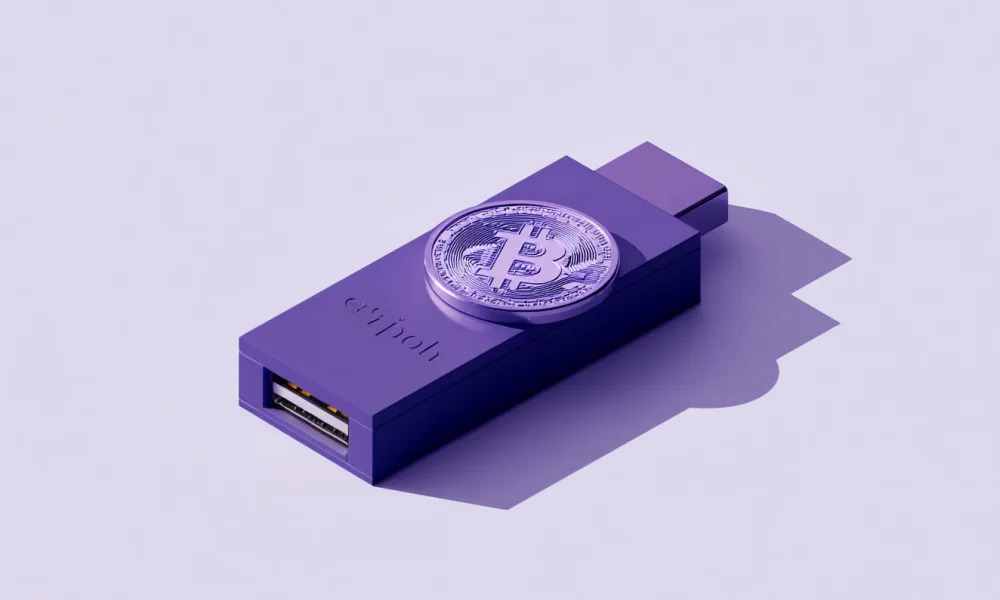
Cold wallets store private keys on devices that never connect to internet networks. Hardware wallets (Ledger Nano, Trezor) are purpose-built devices with secure elements that generate and store keys in isolated environments. Paper wallets are physical documents containing private keys printed or written offline. Air-gapped computers are devices that never connect to networks, used only for signing transactions offline.
The transaction process requires physical interaction. To send funds from a hardware wallet: connect device via USB, unlock with PIN, open wallet software, create transaction on computer, confirm transaction details on device screen, physically press button on device to sign transaction. Private keys never leave the device—the signature happens inside the hardware secure element and only the signed transaction transmits to your computer.
This architectural isolation eliminates entire attack classes. Malware on your computer can’t extract private keys because keys never exist in computer memory. Phishing can’t capture keys through fake interfaces because keys never get typed. Network attackers can’t intercept keys because they never traverse networks. The offline storage model provides security through physical separation rather than encryption alone.
Cold wallets defend against remote attacks but introduce operational risks. If you lose the hardware device and don’t have backup seed phrases, funds are permanently unrecoverable. If you forget the device PIN after multiple wrong attempts, some devices permanently lock. If your seed phrase backup gets stolen or photographed, anyone with that phrase controls your funds. The security model shifts from device compromise to physical security of backup materials.

Technical Security Differences
Hot and cold wallets use identical cryptographic primitives—both generate private keys, derive public addresses, and sign transactions using the same algorithms. The security difference lies in where these operations occur and whether keys are exposed to networked environments. Hot wallets perform operations on internet-connected systems. Cold wallets perform operations in isolated environments and only transmit signed outputs.
Attack surface area differs dramatically. Hot wallets are vulnerable to malware, keyloggers, clipboard hijackers, phishing sites, man-in-the-middle attacks, OS vulnerabilities, and supply chain compromises in wallet software. Cold wallets are only vulnerable to physical theft of device plus PIN, physical theft or compromise of seed phrase backup, supply chain attacks on hardware (extremely rare), and $5 wrench attacks (physical coercion). The attack vector reduction is the core value proposition.
Recovery mechanisms work differently. Hot wallets back up through seed phrases that you must store securely offline—ironically requiring cold storage security for hot wallet recovery. Hardware wallets also use seed phrases for recovery, creating identical offline backup requirements. The difference is that hardware wallet seed phrases only get exposed during initial setup or recovery, while hot wallet seed phrases unlock constantly-connected key storage.

Allocation Strategies Professional Players Use
Professional players typically allocate 80-90% of total poker bankroll to cold storage, with 10-20% in hot wallets as working capital. A player with $50,000 bankroll maintains $5,000-10,000 in hot wallet for immediate access and $40,000-45,000 in hardware wallet for long-term security. This ratio provides operational flexibility while minimizing catastrophic loss exposure from device compromise.
The working capital allocation (hot wallet) covers 1-2 months of expected deposit volume. If you deposit $3,000 monthly, maintain $3,000-6,000 hot wallet balance. This prevents frequent cold wallet access while ensuring you never exhaust working funds mid-session. When hot wallet depletes below threshold, schedule a cold wallet transfer during planned downtime rather than emergency access.
Security-conscious players use multiple hardware wallets for additional isolation. They maintain one hardware wallet as primary cold storage (80% of funds), a second device as backup with separate seed phrase (accessible if primary device fails), and hot wallet for active capital (20%). This redundancy prevents single-device failure from blocking access while maintaining security separation. Some players even use multi-signature setups requiring signatures from multiple devices to authorize large transfers.
Real-World Operational Scenario: Device Compromise Recovery
Player maintains $30,000 poker bankroll with 85% cold storage ($25,500 on Ledger hardware wallet) and 15% hot wallet ($4,500 on phone). Player’s phone gets infected with malware through malicious app download. Malware steals hot wallet seed phrase by capturing screen during wallet backup verification.
- Hot wallet compromised: $4,500 at risk, attacker can drain funds within minutes
- Cold storage unaffected: $25,500 remains secure on hardware wallet with separate seed phrase
- Total exposure: 15% of bankroll ($4,500) versus 100% if entire bankroll was in hot wallet
- Player notices suspicious transaction, immediately transfers remaining hot wallet funds to new wallet address
The Technical Process
Player detects compromise when monitoring wallet shows unexpected outbound transaction for $2,000. Immediately opens cold storage hardware wallet, connects device, creates new hot wallet with fresh seed phrase, transfers remaining $2,500 from compromised hot wallet to new address. Total time: 8 minutes. Attacker manages to steal $2,000 before player responds. Player then transfers $5,000 from cold storage to new hot wallet to restore working capital allocation.
The Outcome
Total loss: $2,000 out of $30,000 bankroll (6.7% loss). Remaining funds: $28,000. Had player stored entire bankroll in single hot wallet, potential loss would have been $30,000 (100% loss). The cold/hot allocation strategy limited damage to working capital only. Player implements new security protocol: dedicated device for crypto wallets only, no app installations beyond essential tools, weekly device security scans, hardware wallet verification for all transfers above $1,000.
How Professionals Handle Wallet Security
Experienced crypto poker players use dedicated devices for hot wallets—phones or computers used exclusively for crypto transactions, never for browsing, email, or file downloads. This isolation reduces malware exposure dramatically. They also enable all available security features: biometric locks, auto-lock timers, encrypted backups, and in some cases, separate hardware security keys (YubiKey) for wallet access.
Technical Risk Management
Professionals maintain multiple independent backups of hardware wallet seed phrases, stored in separate physical locations (home safe, bank deposit box, trusted family member). They use metal seed phrase storage devices (Cryptosteel, Billfodl) that survive fire, flood, and physical damage—paper backups can be destroyed in disasters. They also test recovery procedures annually using small amounts to verify backups work before needing emergency recovery.
System Optimization
Advanced players schedule regular transfers between hot and cold storage at predictable intervals (every 2 weeks, first of month) rather than on-demand. This routine reduces cold wallet connection frequency, minimizing opportunities for supply chain attacks or compromised connection points. They also use air-gapped transaction signing for very large transfers—creating transactions on internet-connected computer, transferring via QR code or USB to offline device for signing, then broadcasting signed transaction from online computer without ever connecting cold storage device to internet.
Technical Evolution in Wallet Security
Emerging wallet technologies are blurring hot/cold distinctions. Multi-signature wallets require signatures from multiple devices to authorize transactions, providing cold storage security even if one key is compromised. Social recovery systems allow trusted contacts to help recover wallets without exposing single points of failure. Hardware wallet integration with mobile devices through secure enclaves enables cold storage convenience approaching hot wallet speeds.
Biometric authentication is improving hardware wallet usability. Next-generation devices incorporate fingerprint sensors eliminating PIN entry requirements while maintaining security. Shamir Secret Sharing splits seed phrases across multiple backups where any subset can recover funds—reducing risk of single backup loss or theft. These advances reduce operational friction of cold storage without compromising security model fundamentals.
The long-term trend is toward graduated security models. Users will access multiple security tiers—instant transactions for small amounts (hot wallet), device confirmation for medium amounts (mobile hardware wallet), multi-device authorization for large amounts (multi-sig cold storage). Understanding current hot/cold architecture allows strategic adaptation as wallet technology evolves while maintaining security principles of key isolation and operational redundancy.
Frequently Asked Questions
Should I use hot wallet or cold wallet for poker bankroll?
Use both in strategic allocation. Cold storage (hardware wallet) should hold 80-90% of bankroll for long-term security. Hot wallet should hold 10-20% as working capital for immediate deposits and withdrawals.
This hybrid approach balances security (cold storage protects majority of funds) with convenience (hot wallet enables instant transactions). Never store entire bankroll in hot wallet—device compromise could cause total loss. Never store only in cold storage—you’ll access hardware wallet too frequently, increasing exposure risk.
Can hardware wallets get hacked?
Hardware wallets are extremely resistant to remote hacking because private keys never leave device and never connect to internet. Theoretical attack vectors exist: supply chain attacks (attacker modifies device before you receive it), physical access attacks (attacker steals device and extracts keys through sophisticated chip-level attacks), or firmware exploits (vulnerabilities in device software).
These attacks are rare, expensive, and require physical access. Hardware wallets can’t be hacked through malware or phishing like hot wallets. Primary risk is physical theft of device plus PIN, or theft of seed phrase backup.
What happens if I lose my hardware wallet?
If you have seed phrase backup (12-24 word recovery phrase), you can recover all funds by entering phrase into new hardware wallet or compatible software wallet. This is why seed phrase backup is critical—it’s the only recovery mechanism.
If you lose device without backup, funds are permanently unrecoverable. Hardware wallet manufacturers recommend creating multiple seed phrase backups during initial setup, storing in separate secure locations. Device loss without backup is user error, not device failure. Always test recovery on new device with small amount before trusting backup.
Are mobile hot wallets safe for poker?
Mobile hot wallets are safe for working capital amounts you can afford to lose, but not for entire bankroll. Phones face constant security threats: malicious apps, phishing attacks via SMS or social media, malware, physical theft, SIM swap attacks. For amounts under $5,000, mobile hot wallets provide acceptable risk-reward ratio if you maintain device security hygiene.
For amounts above $10,000, risk of total loss becomes too significant—use hardware wallet instead. Mobile wallets work for active poker deposits where convenience value exceeds security risk.
How often should I connect my hardware wallet?
Connect hardware wallet only when necessary—ideally monthly or less frequently. The more often you connect, the more exposure opportunities for supply chain attacks, compromised computers, or physical observation.
Set up systematic schedule: connect first of month to review holdings, transfer funds to hot wallet if needed, disconnect and secure device. Emergency connections outside schedule are acceptable but should be rare. If you’re connecting hardware wallet weekly or daily, you’re using it as hot wallet—increase your working capital allocation instead.
Should I keep seed phrase backup digital or physical?
Always physical, never digital. Storing seed phrase in digital form (photo, password manager, cloud storage, encrypted file) defeats purpose of cold storage—digital files can be hacked, cloud accounts compromised, devices infected with malware.
Write seed phrase on paper and store in secure physical location (safe, deposit box), or use metal backup device for disaster resistance. Multiple physical backups in separate locations provide redundancy without digital exposure. The inconvenience of physical-only backup is the security feature—it forces attackers to physically access your locations.