



Blockchain technology fundamentally changes online poker’s trust model by replacing centralized operator control with cryptographically verifiable game integrity. Traditional online poker requires trusting the site’s random number generator, rake calculations, and fund custody. Blockchain enables mathematical verification of card shuffling, transparent rake collection through smart contracts, and player-controlled fund custody through cryptographic keys. This eliminates the need to trust operators for game fairness or financial security.
The operational shift replaces black-box systems with transparent, auditable protocols. Every hand dealt from a blockchain-based random number generator can be independently verified. Rake deductions execute through public smart contract code that players can audit before depositing. Tournament prize pools exist in transparent smart contracts rather than opaque operator accounts. This transparency doesn’t eliminate all trust—players still rely on protocol implementation correctness—but it reduces trust surface area by orders of magnitude.
This guide examines how blockchain protocols verify random number generation, how smart contracts enforce game rules without operator intervention, and what transparency mechanisms enable player verification of poker site operations. You’ll understand which aspects of poker blockchain can cryptographically guarantee versus which still require implementation trust, what trade-offs decentralization introduces, and how verifiable poker infrastructure differs operationally from traditional platforms over the next 2-5 years.
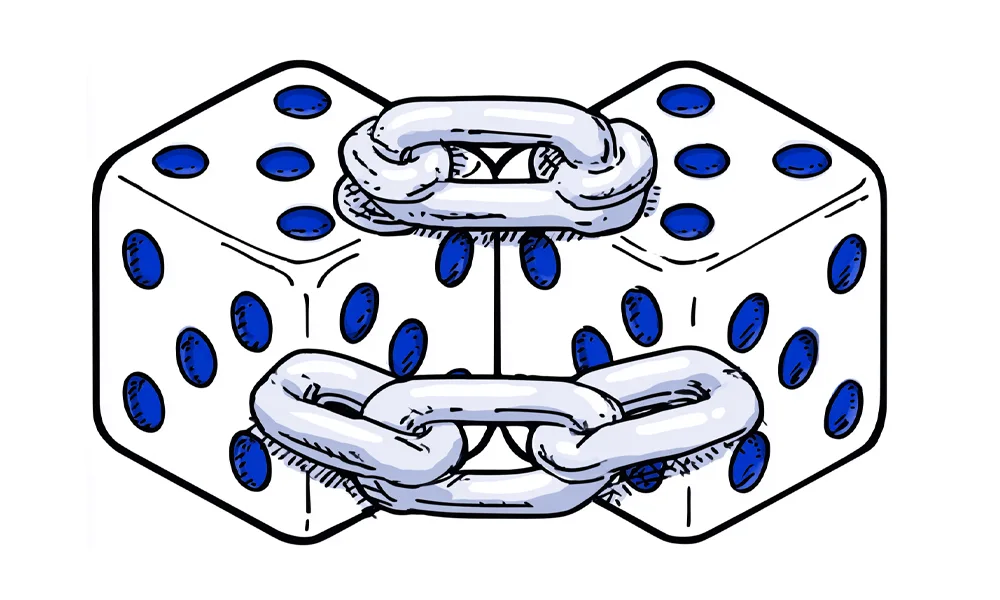
Provably Fair Random Number Generation
Traditional online poker uses proprietary random number generators (RNGs) that players cannot verify. Sites claim independent audits, but players must trust the auditor’s methodology and the site’s implementation. Blockchain poker implements cryptographically verifiable randomness through commitment schemes where the random seed is determined by combining inputs from both the server and players, then hashed to produce verifiable outputs.
The technical process uses commit-reveal protocols: the server commits to a random seed by publishing its hash before players act. Players contribute their own randomness (timing of actions, transaction hashes). After all contributions are collected, the server reveals its original seed, which players verify against the initial hash. The combined inputs generate the final random number used for card dealing. Any mismatch between committed and revealed seeds proves manipulation.
This mechanism ensures neither party can predict or control outcomes. The server cannot change its seed after seeing player contributions (the hash commitment locks the value). Players cannot know the server’s seed before contributing their randomness (hashing conceals the pre-image). The mathematics of cryptographic hash functions guarantee that modifying even one bit of input produces completely different output, making manipulation computationally infeasible.
Practical implementation requires handling timing and network latency. If the server waits for all player inputs before revealing its seed, slow players or network issues can delay the hand. Most blockchain poker protocols use block hashes as an additional randomness source—the hash of a future block that hasn’t been mined yet provides unmanipulable entropy. Miners cannot predict hash values without solving proof-of-work, making block hashes cryptographically secure randomness sources.

What This Means for Game Integrity
Provably fair systems let players verify every hand’s fairness after the fact. Sites provide the original seed commitments, player contributions, and final random outputs. Players run verification software that confirms the hash chain matches and the revealed seeds produce the claimed card distributions. This post-hoc verification detects any manipulation that occurred, even if players couldn’t prevent it in real-time.
The verification requirement changes player-site dynamics. Instead of trusting certification authorities, players become their own auditors. Technically sophisticated players can verify every hand they play. Community-built verification tools allow non-technical players to audit suspicious hands. If manipulation is detected, cryptographic proof exists—not just claims of unfair dealing, but mathematical evidence that committed values don’t match revealed values.
The limitation is that verification happens after hands complete. Real-time prevention of manipulation isn’t guaranteed—only detection after the fact with cryptographic proof. However, economic incentives make manipulation irrational: a site caught cheating loses all reputation and future revenue. The ability to prove cheating cryptographically means attempted manipulation becomes public, permanent evidence of dishonesty. This shifts the trust model from “hope the site is honest” to “the site would be irrational to cheat given inevitable detection.”
Common Misunderstandings About Blockchain Poker
- Believing blockchain makes poker “completely trustless”—implementation bugs, smart contract vulnerabilities, and UI manipulation can still compromise security despite cryptographically correct protocols
- Assuming all blockchain poker is decentralized—many crypto poker sites use centralized servers with blockchain payment rails only, not blockchain-based game logic or verifiable RNG
- Thinking provably fair means instant verification—most systems enable post-hand verification, not prevention of manipulation during play, though detection provides strong economic disincentives
- Expecting blockchain poker to eliminate all house edge—smart contracts enforce transparent rake collection, but rake still exists; blockchain makes it auditable, not free

Smart Contract Game Logic and Automated Payouts
Smart contracts enable poker game rules to execute on blockchain infrastructure without operator intervention. Buy-ins get locked in smart contracts that automatically distribute winnings based on game outcomes. Tournament prize pool calculations execute through public contract code that anyone can audit. Rake collection happens transparently through contract logic rather than hidden server-side deductions.
The technical architecture deploys game state machines as smart contracts. A tournament contract accepts player deposits, tracks eliminations through state updates, and distributes prizes according to predetermined payout structures encoded in contract code. Players interact with contracts through transactions that trigger state transitions—folding updates game state, going all-in locks funds until hand resolution. The blockchain consensus mechanism ensures all players see the same game state.
For cash games, smart contracts manage seat allocation, blind posting, and pot distribution. Each hand exists as a smart contract instance that collects bets, determines winners through the provably fair RNG mechanism, and transfers pots to winners minus rake. The rake calculation is visible in contract code—players verify the exact percentage and can audit every rake deduction by examining on-chain transactions.
The operational trade-off is latency versus decentralization. Fully on-chain poker suffers from blockchain block times—waiting 10-30 seconds between actions for transaction confirmation makes games unplayably slow. Most practical implementations use state channels or hybrid architectures where gameplay happens off-chain with periodic on-chain checkpoints. Players can exit to on-chain arbitration if disputes arise, but normal gameplay operates at traditional poker speed.

Transparent Rake and Economic Auditing
Blockchain poker enables complete economic transparency. Every rake deduction appears as an on-chain transaction that players can verify. Tournament fees get collected through smart contract logic that anyone can audit. Promotional budgets and prize guarantees exist in transparent contract wallets where players verify funds actually exist before tournaments start.
This eliminates several trust requirements from traditional poker. Players don’t need to trust the site’s claim about tournament prize pools—they can verify funds are locked in the contract. Rakeback calculations become auditable because every rake payment is on-chain. If a site claims 30% rakeback, players verify exactly 30% of collected rake gets returned by examining smart contract logic and transaction history.
The transparency extends to site revenue and player funds separation. Traditional sites intermingle player deposits with operating funds, creating insolvency risk. Blockchain poker can segregate funds through separate smart contracts—player deposits in one contract, site operational funds in another. This makes bank runs mathematically impossible if player funds equal player balances in the smart contract. Auditing happens in real-time through blockchain explorers rather than annual reports.
Practical implementation requires accepting that not everything can be on-chain. Customer support, anti-collusion detection, and gameplay UI still require centralized infrastructure. The blockchain component verifies financial operations and core game integrity, but complete decentralization isn’t technically feasible for real-time multiplayer poker. The goal is verifiable critical functions, not eliminating all centralized components.
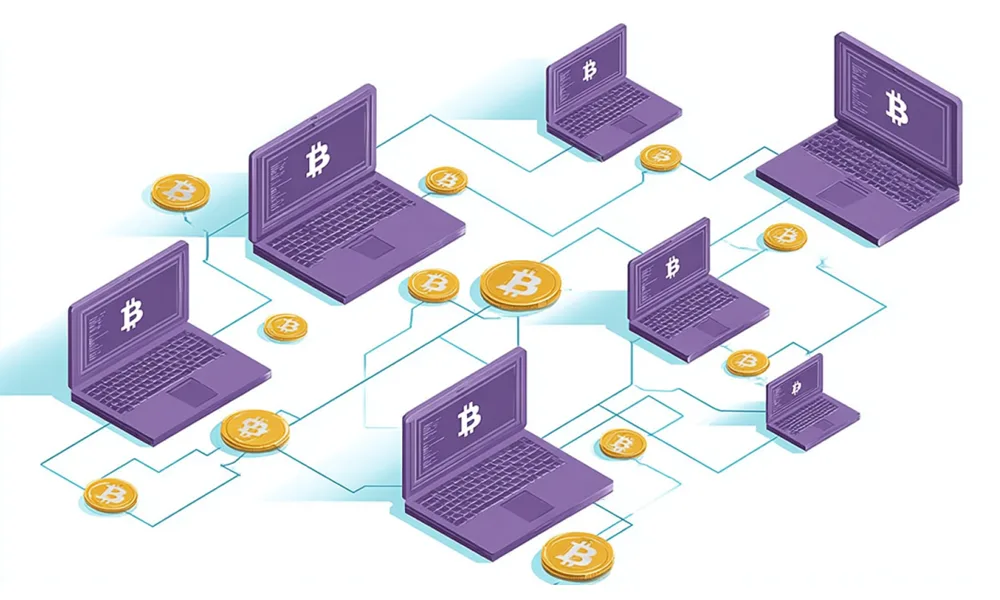
Real-World Scenario: Verifying Tournament Prize Pool Integrity
Player registers for a $100 buy-in tournament advertising $50,000 guaranteed prize pool. Traditional poker requires trusting the site actually has $50,000 allocated. Blockchain poker makes this verifiable through smart contract architecture.
- Tournament smart contract address: publicly visible on blockchain explorer
- Contract balance: shows $50,000 worth of cryptocurrency locked before tournament starts
- Player entries: each $100 buy-in appears as transaction to contract address
- Prize distribution logic: visible in contract code with exact percentage payouts
The Technical Process
Player examines tournament contract on blockchain explorer before registering. Contract shows $50,000 already deposited by site, guaranteeing prize pool regardless of entries. Player sends $100 buy-in transaction to contract address. Contract increments prize pool by $100 minus $10 tournament fee (also visible in contract code). As tournament progresses, contract tracks player eliminations through state updates.
When tournament concludes, contract automatically distributes prizes according to finishing positions. First place receives 20% of prize pool ($10,000 if 500 entries). The payout transaction is visible on-chain—player can verify they received exactly 20% of the final prize pool. No trust required that the site calculated correctly or would honor the payout. Smart contract execution is deterministic and publicly verifiable.
The Outcome
Player has cryptographic proof of prize pool integrity from registration through payout. The $50,000 guarantee was demonstrably funded before tournament start. Every buy-in contribution is auditable. The 10% tournament fee was publicly specified in contract code. First place payout was exactly 20% as promised. If the site had attempted to reduce the payout or charge higher fees than advertised, the contract code and transaction history would provide permanent evidence of deception.
How Players Verify Blockchain Poker Operations
Experienced blockchain poker players don’t rely solely on site interfaces—they verify operations through blockchain explorers and smart contract auditing tools. Before depositing significant funds, they examine contract code for prize distribution logic, rake calculations, and withdrawal mechanisms. They verify contract balances match advertised guarantees and check transaction history for consistency with stated operations.
Technical Due Diligence
Players audit smart contracts for common vulnerabilities: reentrancy attacks that could drain funds, integer overflows in prize calculations, or admin functions that allow unauthorized fund access. They check whether contracts are upgradeable (introducing trust in upgrade mechanism) or immutable (eliminating upgrade risk but preventing bug fixes). They verify contract ownership—who has admin keys and what actions those keys enable.
Ongoing Monitoring
Advanced players set up blockchain monitoring for their deposit addresses and tournament contracts. They receive alerts if unexpected transactions occur or contract balances change abnormally. They verify rake deductions match stated percentages by sampling transactions and comparing actual rake to advertised rates. This continuous auditing replaces periodic trust-based reviews with real-time cryptographic verification.
Technical Evolution in Blockchain Poker
Current blockchain poker implementations face scalability limitations: on-chain transaction costs and latency make fully decentralized poker impractical for real-time play. Emerging solutions use zero-knowledge proofs to verify game state off-chain while maintaining cryptographic security guarantees. Players can prove they played fairly without revealing their hole cards, enabling privacy-preserving auditing.
State channel technology enables instant gameplay with periodic on-chain checkpoints. Players lock funds in a channel, play unlimited hands off-chain with signed state updates, and settle final balances on-chain. This provides traditional poker speed with blockchain security—disputes trigger on-chain arbitration using cryptographic proofs from the state channel. As state channel protocols mature, blockchain poker will match traditional platform performance while maintaining verifiability.
The long-term architecture separates verification layers (on-chain, cryptographically proven) from gameplay layers (off-chain, optimized for speed). Players will experience familiar poker interfaces with traditional responsiveness, while critical operations—deposits, withdrawals, prize distributions, RNG verification—execute through auditable blockchain protocols. This hybrid approach optimizes for both usability and trust minimization, creating poker infrastructure that’s simultaneously more transparent than traditional platforms and equally performant in daily operation.
Frequently Asked Questions
Can blockchain poker eliminate collusion and multi-accounting?
No—blockchain verifies financial operations and random number generation, but cannot prevent collusion between players or detect multi-accounting through technical means alone. These require behavioral analysis, IP tracking, and pattern detection that operate outside blockchain protocols.
Some blockchain poker platforms use identity verification systems or reputation staking to discourage collusion, but the blockchain itself doesn’t solve these problems. Anti-collusion remains a centralized moderation function even in blockchain poker.
Is blockchain poker legal everywhere cryptocurrency is legal?
No—gambling regulations are separate from cryptocurrency regulations. A jurisdiction may permit cryptocurrency ownership while prohibiting online poker.
Blockchain poker platforms must comply with gambling laws in jurisdictions where they operate and where players reside. The decentralized nature of blockchain doesn’t exempt platforms or players from legal obligations. Some jurisdictions specifically regulate blockchain gambling differently from traditional online gambling, creating additional compliance complexity.
What happens if there’s a bug in the smart contract?
Immutable smart contracts cannot be fixed after deployment—bugs are permanent. This is why thorough auditing before deployment is critical. Some platforms use upgradeable contracts to fix bugs, but this reintroduces trust in the upgrade mechanism.
Players should verify whether contracts are audited by reputable security firms and whether bug bounty programs exist. For critical bugs that lock funds, some blockchains support hard forks to reverse transactions, but this requires broad consensus and isn’t guaranteed.
Does blockchain poker have better RTP (return to player) than traditional sites?
Not necessarily—blockchain makes rake transparent and verifiable, but doesn’t eliminate it. Some blockchain poker platforms charge lower rake due to reduced operational costs (no payment processor fees, lower infrastructure costs), while others charge similar rates.
The advantage is transparency: players know exactly what rake they’re paying rather than trusting the site’s claims. Smart contracts enforce stated rake percentages, preventing hidden fee increases or selective rake extraction.
Can I verify randomness in real-time or only after hands complete?
Most provably fair systems enable verification after hand completion, not in real-time during play. The commit-reveal protocol requires the hand to finish before the server reveals its seed. However, the initial commitment (hash) is visible before cards are dealt, proving the server cannot change its seed based on gameplay.
Real-time verification would reveal the server’s seed during the hand, enabling cheating. Post-hand verification provides cryptographic proof of fairness without compromising the game’s security.
Do I need to understand smart contracts and cryptography to play blockchain poker safely?
Basic players can rely on community audits and third-party verification tools without deep technical knowledge. However, for large bankrolls, understanding contract basics is advisable. Many blockchain poker platforms provide verification tools that automate technical checks.
Community forums and independent auditors publish contract reviews that non-technical players can reference. The ideal approach is to start small, use platforms with strong community reputations and published audits, and gradually learn verification techniques as you increase play volume.