


Choosing which cryptocurrency to use for poker deposits isn’t a question with a single correct answer. Ethereum, USDT, Litecoin, and USDC each have distinct protocol architectures that produce different trade-offs in speed, cost, counterparty risk, and price stability. The right choice depends on your deposit size, timing requirements, risk tolerance, and how you manage your broader crypto holdings.
Each currency operates on different consensus mechanisms, fee structures, and settlement finality models. Understanding these differences at the protocol level—not just surface-level comparisons—lets you make decisions based on actual operational trade-offs rather than marketing claims or community sentiment.
This guide breaks down how each currency works in the context of crypto poker deposits and withdrawals, where each model introduces risk, and how to match your currency choice to your specific playing requirements.
The Four-Currency Landscape for Crypto Poker
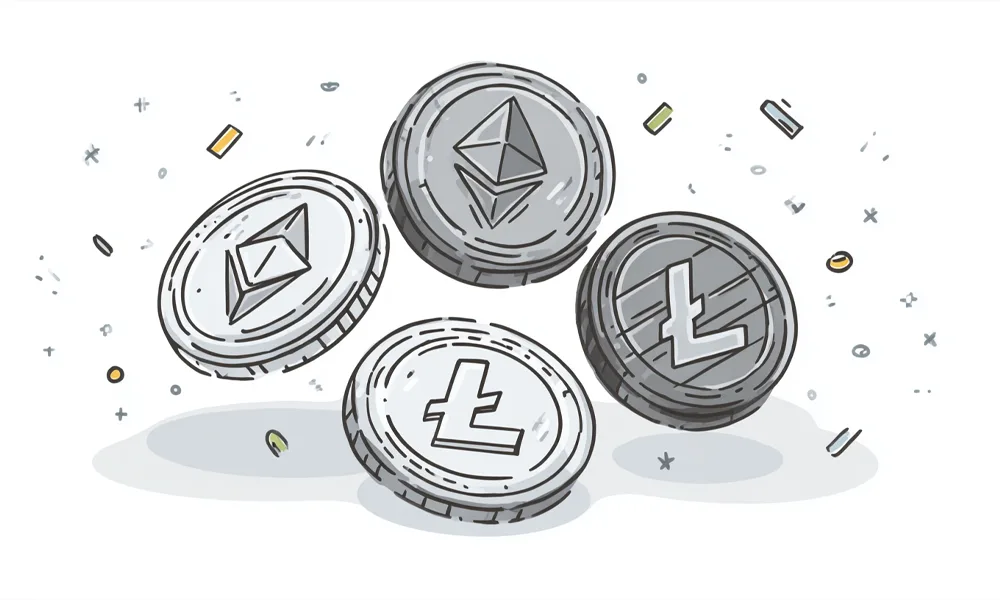
Ethereum (ETH), USDT, Litecoin (LTC), and USDC represent four distinct currency models, not four versions of the same thing. ETH is a native blockchain asset with its own proof-of-stake consensus layer. USDT (Tether) and USDC (USD Coin) are stablecoins—tokens pegged to the US dollar and issued by centralized entities on top of existing blockchains. LTC is a proof-of-work chain derived from Bitcoin‘s codebase, optimized for faster block times and lower fees.
This structural difference matters because it determines where risk lives in each system. ETH and LTC expose you to price volatility but eliminate issuer counterparty risk. USDT and USDC eliminate price volatility but introduce centralized issuer risk, smart contract risk, and regulatory exposure. Neither model is universally superior—the trade-offs are real and context-dependent.
For poker players, the practical implications center on three variables: how long it takes to deposit, how much it costs, and what can go wrong. The following sections address each currency on these dimensions with protocol-level precision.

Ethereum: Speed With Variable Cost
Ethereum operates on a proof-of-stake consensus mechanism since the 2022 Merge. Transactions achieve probabilistic finality within 12 confirmations (approximately 3 minutes under normal conditions), with economic finality through the checkpoint system at roughly 12–15 minutes. Most poker platforms accept ETH deposits after 12 confirmations, making it one of the faster options for on-chain settlement among major assets.
The primary constraint is gas fees. Ethereum uses a base fee + priority fee model where the base fee is burned and the priority tip goes to validators. Gas prices fluctuate based on network demand measured in Gwei. During normal activity, a standard ETH transfer costs 21,000 gas units—at 15–30 Gwei, this translates to fees typically ranging from $1–5. During peak congestion (major NFT drops, market volatility events), fees have historically spiked to $30–80+ for simple transfers.
ETH Fee Volatility in Practice
The unpredictability of Ethereum gas fees creates a specific operational risk for poker deposits. A deposit planned at a $2 fee cost can become a $40 fee cost within hours if network demand spikes. Players who monitor gas prices using tools like etherscan.io’s gas tracker or Blocknative before initiating deposits can time transactions during low-activity windows—typically early morning UTC or weekends—where fees are 40–60% lower than peak periods.
ETH price volatility also affects deposit planning. Because ETH is a non-stable asset, the dollar value of your poker balance changes with ETH market price. A deposit worth $500 in ETH terms can be worth $400 or $600 within 24 hours depending on market movement. Players who want predictable dollar-denominated bankrolls should account for this when choosing ETH over stablecoins.
USDT and USDC: Stability With Counterparty Exposure
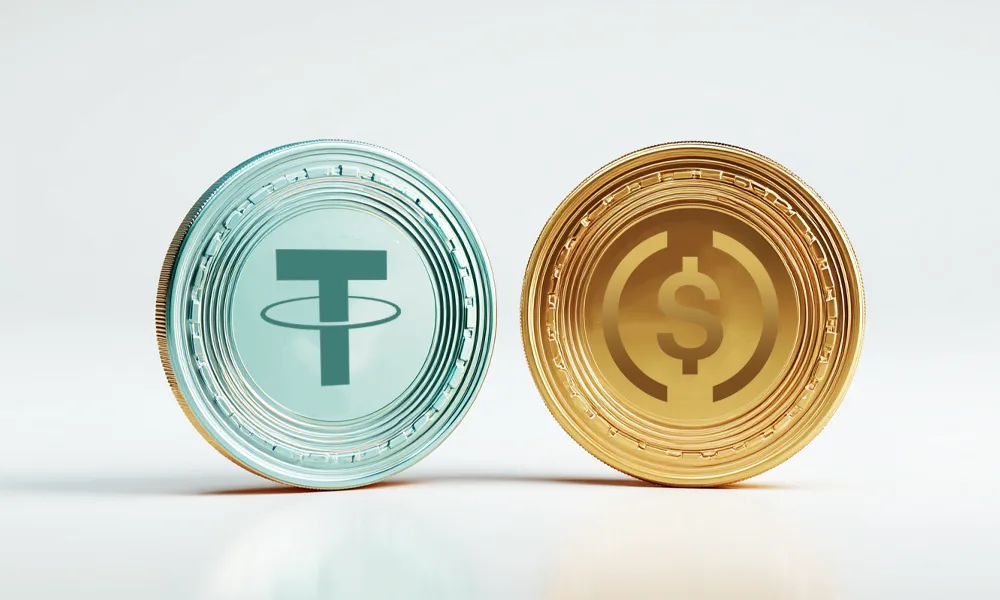
USDT (Tether) and USDC (USD Coin) are both US dollar-pegged stablecoins, but they operate on different reserve models and issuer structures. Understanding these differences matters for risk assessment, even though both function similarly at the transaction level for poker deposits.
How Stablecoin Pegs Work
USDT is issued by Tether Limited and backed by a mix of cash, cash equivalents, and other assets. USDC is issued by Circle and maintains a more transparent reserve structure, primarily composed of short-term US Treasuries and cash held at regulated financial institutions. Both peg to $1.00, but peg stability under stress conditions differs based on reserve quality and redemption mechanisms.
Both tokens exist on multiple blockchains. USDT is available on Ethereum (ERC-20), Tron (TRC-20), and others. USDC operates on Ethereum, Solana, and several other chains. The blockchain you use determines fees and confirmation speed—USDT on Tron (TRC-20) confirms in 2–3 minutes with fees under $1, while USDT on Ethereum costs gas fees identical to any ERC-20 token transfer.
The Smart Contract and Centralization Risk
Unlike ETH or LTC, stablecoins are smart contract tokens. This introduces two risk layers absent from native blockchain assets. First, smart contract vulnerabilities: a bug in the token contract can affect all holders. Second, centralized control: both Tether and Circle maintain blacklist functionality, allowing them to freeze specific wallet addresses by regulatory order or internal policy. If your address is blacklisted—for any reason—your stablecoin balance becomes inaccessible.
This risk is low probability for most players but non-zero, and it represents a fundamentally different risk profile than holding ETH or LTC, where no centralized entity can freeze funds at the wallet level.
Litecoin: Consistent Performance, Lower Profile
Litecoin uses a proof-of-work consensus mechanism with 2.5-minute average block times—four times faster than Bitcoin’s 10-minute average. With 6 confirmations required by most platforms (15 minutes average, ranging 10–25 minutes based on block variance), LTC offers a reliable middle ground between Bitcoin’s deliberate pace and Ethereum’s faster but costlier settlement.
Network fees on Litecoin are consistently low—typically $0.01–0.20 per transaction under virtually all market conditions. Unlike Bitcoin or Ethereum, LTC fees don’t spike significantly during price appreciation periods because network utilization remains substantially lower. This predictability is operationally valuable: you can set fees confidently without monitoring mempool congestion or gas trackers.
The Liquidity Trade-Off
Litecoin’s primary limitation is exchange liquidity relative to ETH or major stablecoins. On some exchanges, converting fiat to LTC involves wider spreads or fewer direct trading pairs, adding friction at the acquisition stage. For players sourcing crypto specifically for poker deposits rather than managing an existing crypto portfolio, this initial acquisition step may add cost that partially offsets LTC’s fee advantage.
LTC also carries price volatility like any non-stable asset. However, because confirmation times are short and fees are minimal, the window of price exposure between initiating a deposit and receiving credit is narrow—typically 15–25 minutes, limiting volatility risk relative to longer-confirmation assets.
Side-by-Side Technical Comparison
The following table compares the four currencies across the dimensions most relevant to crypto poker deposits. All figures reflect typical network conditions—fees and times can vary during unusual market activity.
| Currency | Avg. Confirmation Time | Typical Fee Range | Price Stability | Issuer Risk | Primary Risk Factor |
|---|---|---|---|---|---|
| Ethereum (ETH) | 3–5 minutes | $1–5 normal / $30–80+ congestion | Volatile | None | Gas fee spikes |
| USDT (TRC-20) | 2–3 minutes | $0.50–1.50 | Stable ($1 peg) | Tether Limited | Reserve opacity, blacklisting |
| USDT (ERC-20) | 3–5 minutes | $1–5 normal / $30–80+ congestion | Stable ($1 peg) | Tether Limited | Gas fees + issuer risk |
| USDC (ERC-20) | 3–5 minutes | $1–5 normal / $30–80+ congestion | Stable ($1 peg) | Circle | Gas fees + regulatory exposure |
| Litecoin (LTC) | 10–25 minutes | $0.01–0.20 | Volatile | None | Price volatility, lower liquidity |
Note that USDT and USDC on Ethereum inherit Ethereum’s full gas fee structure. The cost advantage of stablecoins only applies when using Tron-based USDT (TRC-20) or other low-fee networks—not when transacting on Ethereum mainnet.
Real-World Scenario: Choosing a Currency Under Time Pressure
A player needs to deposit funds 20 minutes before a tournament registration closes. They hold ETH, TRC-20 USDT, and LTC in their wallet. Network conditions show elevated Ethereum gas fees—currently 85 Gwei, roughly 3–4x the normal baseline.
- ETH deposit: fee cost elevated (check etherscan.io gas tracker for current rate), confirmation in 3–5 minutes—fast enough, but expensive
- TRC-20 USDT: fee under $1, confirmation in 2–3 minutes—fastest and cheapest option
- LTC deposit: fee under $0.20, confirmation in 10–25 minutes—may be tight with 20-minute window
The Technical Decision
TRC-20 USDT is optimal here: it avoids elevated Ethereum gas fees, confirms faster than LTC, and eliminates price volatility risk during the deposit window. The player generates a USDT (TRC-20) deposit address from the cashier, verifies the network selection matches (sending TRC-20 to an ERC-20 address causes permanent fund loss), and initiates the transfer. Funds confirm and credit within 3 minutes, leaving ample time before registration closes.
The Outcome
Total cost: under $1 in network fees. Total time: 3–4 minutes. The critical operational detail was verifying network compatibility before sending—a common mistake that results in irreversible fund loss when players send USDT on one network to an address configured for a different network. Always confirm the network matches in both your wallet and the platform’s deposit interface before initiating.
How Professionals Select Currencies for Poker
Experienced crypto poker players don’t use a single currency for all deposits. They maintain allocations across currencies and select based on current network conditions, deposit size, and processing timing requirements.
Technical Risk Management
For large deposits where dollar certainty matters, stablecoins eliminate the risk of value erosion between initiating the transfer and receiving credit. For deposits where fee minimization matters more than stability, LTC provides consistent low-cost settlement. For players already holding significant ETH positions who want to avoid conversion friction, ETH deposits make operational sense when gas fees are within acceptable range—check etherscan.io before initiating to confirm current conditions.
Network Selection Discipline
The single most dangerous mistake with stablecoins is network mismatch. USDT exists on multiple chains, and sending TRC-20 USDT to an ERC-20 deposit address—or vice versa—results in permanent fund loss. The platform’s cashier interface specifies which network is supported for each deposit address. Treat network selection verification as a mandatory pre-send checklist item, every time, regardless of how routine the deposit feels. This is where experienced players maintain strict discipline because the error is irreversible and the platform cannot recover misrouted funds.
Protocol Evolution and Currency Selection
The competitive landscape between these currencies will shift as Layer 2 solutions mature. Ethereum’s Layer 2 networks (Arbitrum, Optimism, Base) already offer ETH and USDC transfers at sub-cent fees with near-instant finality. As poker platforms integrate Layer 2 deposit infrastructure, the fee disadvantage of ETH and ERC-20 stablecoins relative to TRC-20 USDT or LTC will narrow significantly.
For players building long-term operational habits, understanding the base-layer trade-offs now provides the technical foundation to evaluate Layer 2 options as they become available. The core principles—confirmation requirements, fee market dynamics, custody and issuer risk—remain consistent across scaling solutions, even as specific parameters change.
The practical implication: don’t optimize exclusively for today’s fee environment. Build familiarity with multiple currencies and networks so you can adapt as platform deposit options expand. Download the ACR Poker software to check which networks are currently supported in the cashier before planning your deposit strategy.
Frequently Asked Questions
What happens if I send USDT on the wrong network?
Sending USDT on an incompatible network—for example, TRC-20 USDT to an ERC-20 address—results in permanent fund loss in most cases. The transaction completes on-chain but the receiving platform cannot access funds on a different network. Always verify the network specified in the platform’s deposit interface matches the network selected in your wallet before sending. This check is non-negotiable.
Is USDC safer than USDT for poker deposits?
USDC maintains more transparent reserves than USDT, with regular attestations from regulated auditors and reserves held primarily in US Treasuries and cash. USDT’s reserve composition has historically been less transparent. For poker deposits specifically, both function identically at the transaction level. The safety distinction is relevant if you’re holding large stablecoin balances long-term—for short-duration deposit-play-withdraw cycles, the practical difference is minimal.
Why are Ethereum gas fees so unpredictable?
Ethereum’s EIP-1559 fee mechanism sets a base fee that adjusts algorithmically based on block utilization. When blocks fill above 50% capacity, the base fee increases; below 50%, it decreases. During high-demand events—market volatility, NFT launches, DeFi activity—blocks fill rapidly and base fees spike exponentially. The base fee is burned, not paid to validators, and cannot be predicted more than a few blocks in advance. Use gas tracker tools like etherscan.io or Blocknative to assess current conditions before depositing.
Can stablecoin issuers freeze my poker winnings?
Both Tether and Circle maintain technical capability to blacklist wallet addresses, effectively freezing USDT or USDC balances at those addresses. This has occurred in documented cases involving regulatory orders and theft recovery. For funds held in a poker platform’s custody (your account balance), the platform holds the stablecoins—your exposure is to the platform, not directly to the issuer. When withdrawing to your own wallet, the issuer blacklist risk applies at the wallet level.
Is Litecoin still worth using given its lower market profile?
Litecoin’s market profile is lower than ETH or major stablecoins, but its technical characteristics remain well-suited for poker deposits: consistent low fees, 15-minute confirmation times, and no issuer counterparty risk. The main friction is acquisition—not all exchanges offer convenient LTC on-ramps. For players who already hold LTC or whose exchange supports direct LTC purchase, it remains a practical and cost-efficient deposit option for most session sizes.
Should I convert everything to stablecoins before depositing?
Converting to stablecoins before depositing eliminates price volatility risk during the transfer window, but incurs conversion fees and introduces issuer counterparty risk. For players whose primary crypto holdings are ETH or LTC, conversion adds cost without necessarily reducing risk—it trades volatility risk for issuer risk. For players who specifically want dollar-denominated bankroll certainty, stablecoins are a reasonable operational choice, provided network selection is verified carefully on every transaction.