



Online poker sites accept multiple cryptocurrencies, each with distinct technical characteristics affecting confirmation speed, transaction costs, and volatility exposure. Bitcoin remains the most widely accepted cryptocurrency due to network maturity and liquidity depth. Ethereum offers faster confirmations through proof-of-stake consensus. Stablecoins like USDT and USDC eliminate price volatility while maintaining blockchain settlement benefits. Understanding these technical differences allows players to select optimal cryptocurrencies based on their priorities.
Cryptocurrency acceptance varies by poker site, but most platforms support 4-8 major options. The choice matters because different cryptocurrencies operate on different blockchains with different consensus mechanisms, block times, and fee structures. Bitcoin transactions confirm in 20-30 minutes with 2-3 confirmations. Ethereum confirms in 3 minutes with 12 confirmations. Litecoin splits the difference at 15 minutes with 6 confirmations. These aren’t arbitrary differences—they reflect fundamental protocol design decisions.
This guide analyzes the major cryptocurrencies accepted for online poker: their technical architectures, confirmation requirements, fee structures, volatility profiles, and practical implications for deposits and withdrawals. You’ll understand why sites accept specific cryptocurrencies, how to evaluate trade-offs between options, and which cryptocurrency suits different use cases in poker funding.
Bitcoin: The Baseline Standard
Bitcoin established the cryptocurrency poker market and remains the most universally accepted option. Every major poker site accepting cryptocurrency supports Bitcoin. This universal acceptance reflects Bitcoin’s network effects—highest liquidity, deepest market penetration, most developed infrastructure. Bitcoin’s 10-minute average block time creates the baseline against which other cryptocurrencies are measured.
Bitcoin operates through proof-of-work consensus, requiring miners to solve computational puzzles to validate blocks. This energy-intensive process provides maximum decentralization and security but creates variable confirmation times based on network hashrate and difficulty adjustments. During normal conditions, transactions confirm predictably. During hashrate fluctuations or difficulty adjustment periods, confirmation times can extend 15-20% beyond averages.
Transaction fees on Bitcoin follow dynamic fee markets. The mempool (unconfirmed transaction queue) operates as a priority auction—higher fee transactions confirm first when blocks reach capacity. During low activity periods, fees drop to 1-5 satoshis per byte ($0.50-$2.50 per transaction). During congestion, fees spike to 50-100+ sat/vB ($25-$50+). This volatility requires active fee management for cost-effective poker deposits.
Bitcoin’s price volatility introduces timing risk during confirmation periods. A $500 deposit might be worth $490 or $510 by the time it confirms 20-30 minutes later. For large deposits during volatile markets, this represents meaningful dollar variance. Players prioritizing price stability over maximum decentralization should consider stablecoins. Players prioritizing censorship resistance and long-term value storage accept Bitcoin’s volatility as a feature, not a bug.
Ethereum: Speed Through Proof-of-Stake
Ethereum’s transition to proof-of-stake consensus (September 2022) fundamentally changed its poker deposit characteristics. Block time dropped to 12 seconds with deterministic finality after 12 confirmations (approximately 3 minutes total). This represents an 85% reduction in confirmation time compared to Bitcoin while maintaining equivalent security guarantees. For time-sensitive poker deposits, Ethereum’s speed advantage is operationally significant.
Proof-of-stake eliminates mining’s computational overhead. Validators stake ETH as collateral, earning rewards for honest participation and losing stake for malicious behavior. This mechanism provides security through economic incentives rather than energy expenditure. The result: faster finality, lower base layer costs, and predictable block production. Ethereum blocks arrive every 12 seconds regardless of network conditions.
Gas fees (Ethereum’s transaction cost model) operate differently than Bitcoin fees. Instead of per-byte pricing, Ethereum charges for computational operations. Simple transfers cost approximately 21,000 gas units. Complex smart contract interactions cost more. Gas prices fluctuate based on network demand, but Ethereum’s larger block space (compared to demand) typically maintains lower fees than Bitcoin during equivalent activity levels. Post-merge average transaction costs: $1-$5.
Ethereum’s price volatility mirrors Bitcoin’s but with higher beta—Ethereum typically moves 1.5-2x Bitcoin’s percentage changes. A $500 Ethereum deposit faces the same timing risk as Bitcoin but with amplified magnitude. However, the 85% shorter confirmation window reduces exposure duration. For players comfortable with crypto volatility, Ethereum’s speed advantage often outweighs its increased price sensitivity during the brief confirmation period.
Litecoin: The Middle Ground
Litecoin functions as Bitcoin’s faster, cheaper alternative through parameter adjustments to Bitcoin’s codebase. Block time: 2.5 minutes (4x faster than Bitcoin). Confirmation requirement: 6 blocks (15 minutes total, splitting the difference between Bitcoin and Ethereum). This positioning creates a practical middle ground for players who want faster confirmations than Bitcoin without Ethereum’s different security model.
Litecoin uses Bitcoin’s proof-of-work consensus with a different hashing algorithm (Scrypt instead of SHA-256). This technical difference doesn’t affect users directly but creates separate mining infrastructure. Litecoin maintains the same security philosophy as Bitcoin—decentralized, energy-secured consensus—while accepting the trade-offs of faster blocks (slightly higher orphan rate, larger blockchain growth).
Transaction fees on Litecoin remain consistently lower than Bitcoin due to lower network demand and faster block production. Average fees: $0.05-$0.25 per transaction regardless of network conditions. This cost predictability simplifies deposit planning—players can estimate total costs accurately without monitoring mempool conditions. For frequent small deposits, Litecoin’s fee advantage compounds meaningfully over time.
Litecoin’s price tracks Bitcoin’s movements closely but with lower liquidity and higher volatility. During the 15-minute confirmation window, Litecoin prices can diverge from Bitcoin more than proportionally. Market depth matters—large Litecoin movements face more slippage than equivalent Bitcoin movements. For poker deposits under $1,000, liquidity concerns are minimal. For larger sums, Bitcoin’s deeper markets provide more stable pricing.
Stablecoins: Eliminating Volatility
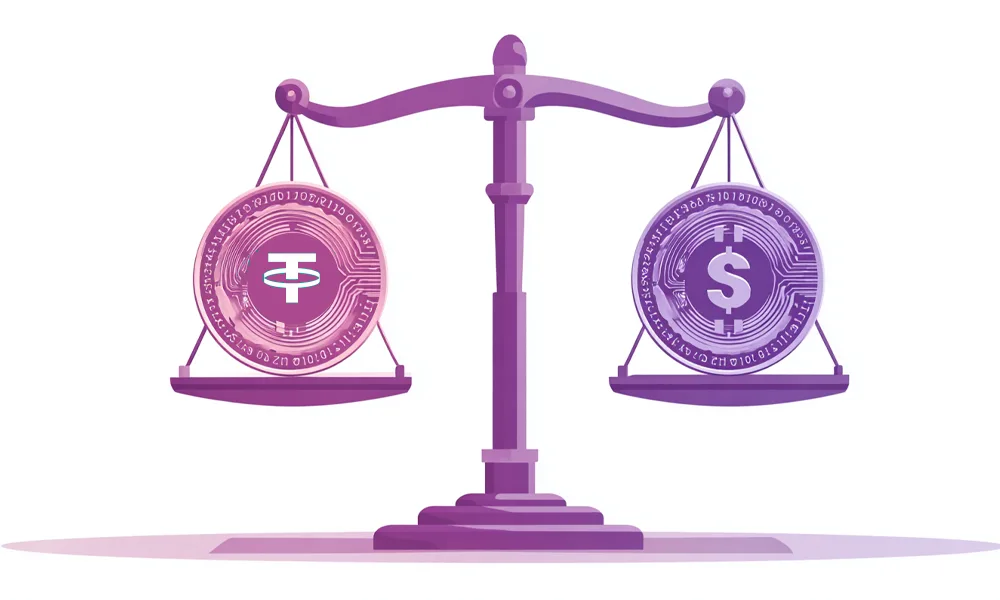
USDT (Tether) and USDC (USD Coin) maintain 1:1 peg to the US dollar through reserve backing. This eliminates confirmation period volatility entirely—a $500 stablecoin deposit confirms as exactly $500 regardless of market movements. For players who want blockchain settlement benefits without price exposure, stablecoins provide optimal solutions. Most poker sites accept USDT; USDC acceptance is growing but less universal.
Stablecoins operate as tokens on existing blockchains rather than native cryptocurrencies. USDT and USDC are available on multiple chains: Ethereum (ERC-20), Tron (TRC-20), Polygon, Arbitrum, and others. Each chain has different confirmation times and fees. USDT on Tron confirms fastest (approximately 1 minute) with near-zero fees. USDT on Ethereum follows Ethereum’s 3-minute confirmation time with Ethereum’s gas fees. Chain selection matters operationally.
The price stability comes with counterparty risk. Stablecoins require trust in the issuer to maintain reserves and honor redemptions. USDC is issued by Circle (backed by Coinbase) with regular attestations. USDT is issued by Tether Limited with less transparency. Both have maintained their pegs through multiple market cycles, but neither offers Bitcoin’s trustless architecture. The trade-off: eliminate volatility, accept centralization risk.
Regulatory risk affects stablecoins more than decentralized cryptocurrencies. Issuers operate under traditional financial oversight. Accounts can be frozen at issuer or regulatory request. Tether and Circle maintain blacklist capabilities to comply with legal requirements. For most poker players, these risks are theoretical—stablecoins function reliably for deposit/withdrawal cycles. For players prioritizing censorship resistance, Bitcoin remains superior despite its volatility.
What This Means for Your Poker Deposits
Cryptocurrency selection should match your operational priorities. If you prioritize speed and hold existing Ethereum, deposit with ETH—3-minute confirmations enable last-minute tournament registration. If you prioritize cost and make frequent small deposits, Litecoin’s sub-$0.25 fees minimize expenses. If you prioritize price stability and want predictable USD values, stablecoins eliminate confirmation period risk.
Most experienced players maintain holdings across multiple cryptocurrencies for flexibility. A typical allocation: 40% Bitcoin (long-term storage, maximum decentralization), 30% stablecoins (active poker bankroll, zero volatility), 20% Ethereum (fast deposits when needed), 10% Litecoin (small frequent deposits). This diversification captures each cryptocurrency’s strengths for different use cases.
Site acceptance also constrains choices. While Bitcoin is universal, not all sites accept all stablecoins or secondary cryptocurrencies. Before acquiring cryptocurrency specifically for poker, verify your target site accepts that option. Most sites clearly list accepted cryptocurrencies on cashier pages. Some implement minimum deposit amounts that vary by cryptocurrency—Bitcoin minimums are typically higher ($10-$50) than stablecoin minimums ($5-$25).
Common Mistakes Players Make
- Buying cryptocurrency on exchanges without checking which chains the poker site accepts—USDT on Ethereum isn’t interchangeable with USDT on Tron
- Prioritizing lowest fees without considering confirmation speed, missing tournament registrations despite saving $2 on transaction costs
- Holding only Bitcoin for poker deposits, paying $20-$30 in fees during congestion when stablecoin alternatives cost $1-$3
- Assuming all stablecoins are identical—USDT and USDC have different risk profiles, reserve structures, and regulatory relationships
Bitcoin Cash and Alternative Cryptocurrencies
Bitcoin Cash (BCH) emerged from Bitcoin’s 2017 block size debate. BCH increased block size to 32MB, enabling more transactions per block and lower fees. Technical characteristics: 10-minute blocks like Bitcoin, but near-zero fees regardless of activity ($0.01 per transaction average). Poker site acceptance is moderate—major sites support BCH but it’s less universal than Bitcoin or Ethereum.
The primary advantage of Bitcoin Cash is fee predictability at Bitcoin-like confirmation speeds. Players can deposit $50 or $5,000 with identical $0.01 costs. This eliminates the fee management complexity inherent in Bitcoin. However, BCH has lower liquidity than Bitcoin—acquiring BCH requires additional exchange steps for most players. The convenience savings may not justify the acquisition overhead unless you already hold BCH.
Other cryptocurrencies (Dogecoin, Ripple, Bitcoin SV) see occasional poker site acceptance but remain niche options. Dogecoin offers similar benefits to Litecoin with meme culture appeal. Ripple (XRP) provides near-instant settlement but with centralized validator sets. These alternatives don’t offer compelling technical advantages over the major four (BTC, ETH, LTC, stablecoins) for poker purposes. Network effects matter—fewer sites accept these options, limiting utility.
Privacy coins (Monero, Zcash) provide enhanced transaction anonymity through protocol-level obfuscation. Monero hides transaction amounts and participants. Zcash offers optional privacy through zero-knowledge proofs. Poker site acceptance is limited due to regulatory concerns and exchange delisting pressures. Players prioritizing maximum privacy may value these options, but availability constraints make them impractical for most users.
Layer 2 Solutions and Emerging Options
Lightning Network (Bitcoin’s Layer 2) enables instant, sub-cent Bitcoin transactions by moving activity off-chain. Instead of broadcasting every transaction to the blockchain, Lightning opens payment channels between parties and settles net balances periodically. This architecture provides Bitcoin’s security with near-zero fees and instant settlement. Poker site adoption remains limited but growing—ACR Poker and select sites offer Lightning deposits.
Lightning requires different wallet infrastructure than standard Bitcoin. Users must run Lightning-capable wallets, manage channel liquidity, and understand routing. This complexity currently limits Lightning to technically sophisticated users. However, wallet UX improvements are rapidly reducing these barriers. Within 2-3 years, Lightning may become the default Bitcoin deposit method for sites that implement it, rendering base layer Bitcoin deposits obsolete for poker.
Ethereum Layer 2 solutions (Arbitrum, Optimism, Polygon) similarly enable instant, low-cost transactions while maintaining Ethereum security guarantees. These networks process transactions off Ethereum’s main chain and periodically submit batched proofs to Layer 1. Transaction fees: $0.01-$0.10. Confirmation times: under 5 seconds. The technical trade-off: slightly different security assumptions than Layer 1 in exchange for dramatic efficiency gains.
Poker site adoption of Layer 2 solutions is nascent. Implementation requires wallet integration work and player education about network selection. However, the operational advantages are overwhelming—instant deposits with negligible fees eliminate the primary friction points in crypto poker funding. Players should monitor site announcements for Layer 2 support and prioritize sites that implement these solutions as they become available.
Real-World Selection: Choosing for Specific Scenarios
Player needs to deposit $200 for a tournament starting in 40 minutes. Currently holds Bitcoin and USDT on Ethereum.
- Bitcoin option: 2-3 confirmations required (20-30 minutes typical, 45-60 minutes worst case during congestion)
- USDT option: 12 confirmations required (3 minutes guaranteed via Ethereum’s deterministic finality)
- Current Bitcoin mempool: Moderate congestion, next-block fee 35 sat/vB ($7 for standard transaction)
- Current Ethereum gas: Low activity, transaction cost $2 for USDT transfer
The Technical Process
Player evaluates timing risk. Bitcoin worst-case (60 minutes) cuts too close to tournament start. USDT guaranteed confirmation (3 minutes) provides safety margin. Player initiates USDT transfer from personal wallet to poker site deposit address. Transaction broadcasts at 12:37 PM. Ethereum includes transaction in next block (12 seconds later). After 12 confirmations (2 minutes 24 seconds total), poker site credits account at 12:39:24 PM.
The Outcome
Deposit confirmed with 37 minutes before tournament start. Total cost: $2 gas fee. Player registers for tournament at 12:41 PM with comfortable margin. Bitcoin would have worked (30 minutes typical) but introduced unnecessary timing risk. The $5 savings versus Bitcoin wasn’t significant relative to tournament buy-in, but the timing certainty was operationally valuable. For time-sensitive deposits, Ethereum-based stablecoins provide optimal speed-cost balance.
How Professionals Handle Cryptocurrency Selection
Experienced crypto poker players maintain strategic cryptocurrency allocations rather than holding single options. They keep 20-30% of poker bankroll in stablecoins (USDT or USDC) for immediate deposits without volatility exposure. They maintain Bitcoin holdings for long-term value storage but don’t use Bitcoin for routine deposits during high-fee periods. They acquire Ethereum or Litecoin specifically for time-sensitive or cost-sensitive deposits when appropriate.
Technical Risk Management
Professionals avoid concentration risk by holding stablecoins from multiple issuers—both USDT and USDC provide redundancy if either faces regulatory or operational issues. They maintain positions across multiple blockchains (USDT on both Ethereum and Tron) to preserve deposit capability if one network experiences congestion or issues. They also monitor exchange liquidity before acquiring less common cryptocurrencies, ensuring ability to convert back to fiat at favorable rates when needed.
System Optimization
Advanced players optimize cryptocurrency selection for specific deposit sizes. Deposits under $100 use low-fee options (Litecoin, USDT on Tron) regardless of confirmation speed—$0.10 fees matter more at small scales. Deposits over $1,000 use high-liquidity options (Bitcoin, USDT on Ethereum) despite higher fees—price slippage matters more at large scales. They also coordinate cryptocurrency selection with withdrawal plans—depositing in the same cryptocurrency they plan to withdraw minimizes conversion steps and preserves tax basis tracking.
Technical Evolution in Cryptocurrency Acceptance
Current poker site cryptocurrency acceptance reflects 2015-2023 technology—Layer 1 blockchain settlement with 1-30 minute confirmation times and variable fees. Layer 2 solutions (Lightning Network, Ethereum rollups) eliminate these friction points through instant settlement and sub-cent fees. As wallet infrastructure matures and sites integrate these protocols, the cryptocurrency selection calculus will change fundamentally.
Lightning-enabled Bitcoin provides instant deposits with zero fees, eliminating Bitcoin’s current disadvantages (slow confirmations, high fees during congestion) while preserving its advantages (maximum decentralization, deepest liquidity). Ethereum Layer 2 networks provide equivalent benefits for ETH and stablecoins. Within 3-5 years, selecting cryptocurrencies based on confirmation speed or fee structures may become obsolete—all major options will offer instant, near-free settlement through Layer 2 infrastructure.
The long-term trend points toward cryptocurrency convergence around user experience while preserving underlying technical diversity. Players will select based on volatility preferences (Bitcoin/Ethereum vs stablecoins) and philosophical preferences (decentralization vs convenience) rather than operational characteristics. For now, understanding current technical trade-offs enables optimal cryptocurrency selection for poker funding across different scenarios and priorities.
Frequently Asked Questions
Can I deposit with one cryptocurrency and withdraw with another?
Yes, most poker sites allow this flexibility. Sites maintain separate cryptocurrency balances or convert deposits to USD equivalent upon confirmation. You can deposit Bitcoin and withdraw USDT based on current network conditions and preferences.
However, this creates tax complexity—each conversion is potentially a taxable event. From an accounting perspective, depositing and withdrawing the same cryptocurrency simplifies record-keeping and preserves cost basis tracking for tax purposes.
Why do confirmation requirements vary by cryptocurrency and poker site?
Confirmation requirements balance security against convenience. Newer sites with less sophisticated monitoring require more confirmations (6-12) to protect against double-spend attacks and blockchain reorganizations. Established sites with real-time monitoring accept fewer confirmations (1-3) for trusted accounts.
The cryptocurrency itself also matters—Bitcoin requires fewer confirmations than faster-block cryptocurrencies to achieve equivalent finality probability. Sites calibrate requirements to maintain consistent security levels across different cryptocurrencies.
Are stablecoins actually stable during market crashes?
Stablecoins maintain their pegs through most market conditions but face stress during extreme volatility. USDT and USDC have maintained 1:1 USD peg through multiple crypto crashes, including 2022’s broad market decline. However, temporary depegging (trading at $0.95-$0.98) can occur during panic selling when redemption demand exceeds issuer processing capacity.
For poker deposits and withdrawals within 24-48 hour timeframes, these brief deviations are operationally irrelevant. For extended holdings, understanding issuer reserve structure matters.
Should I hold cryptocurrency on exchanges or in personal wallets for poker deposits?
Personal wallet custody provides better security but introduces operational overhead. Exchange custody simplifies deposits (one step from purchase to poker site) but introduces platform risk—exchange hacks, insolvency, or account restrictions affect access. The optimal approach depends on holding size and frequency.
For active poker bankrolls under $2,000 with frequent deposits, exchange custody may be acceptable. For larger holdings or infrequent deposits, personal wallet custody with proper security practices (hardware wallets, seed phrase protection) is superior.
How do I minimize costs when converting between cryptocurrencies for poker?
Direct conversion on exchanges typically costs 0.1-0.5% in trading fees. Converting through poker deposits and withdrawals adds site fees and network fees on both sides (2-4% total). The most cost-effective approach: hold multiple cryptocurrencies simultaneously rather than converting between them.
Buy Bitcoin, Ethereum, and USDT separately during initial acquisition, then select appropriate option per deposit scenario. This eliminates conversion costs entirely while preserving flexibility across different network conditions and use cases.
What happens if I send cryptocurrency to the wrong network address?
Cross-network sends (Bitcoin to Ethereum address, or USDT-ERC20 to site expecting USDT-TRC20) typically result in permanent loss. Blockchains are separate networks—Bitcoin exists only on Bitcoin’s blockchain, Ethereum only on Ethereum’s. Sending to wrong-network addresses means funds arrive on a blockchain where the recipient doesn’t control private keys.
Some poker sites can recover cross-network sends through manual intervention if the networks are compatible (USDT across different chains), but this isn’t guaranteed. Always verify both the cryptocurrency and the specific network (chain) before sending.